

Isometric Slides
- Permanent installation
-1.webp)
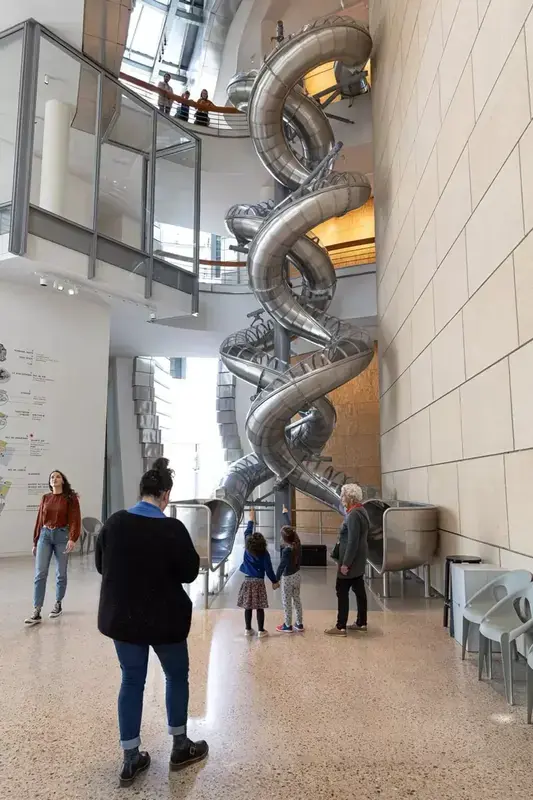
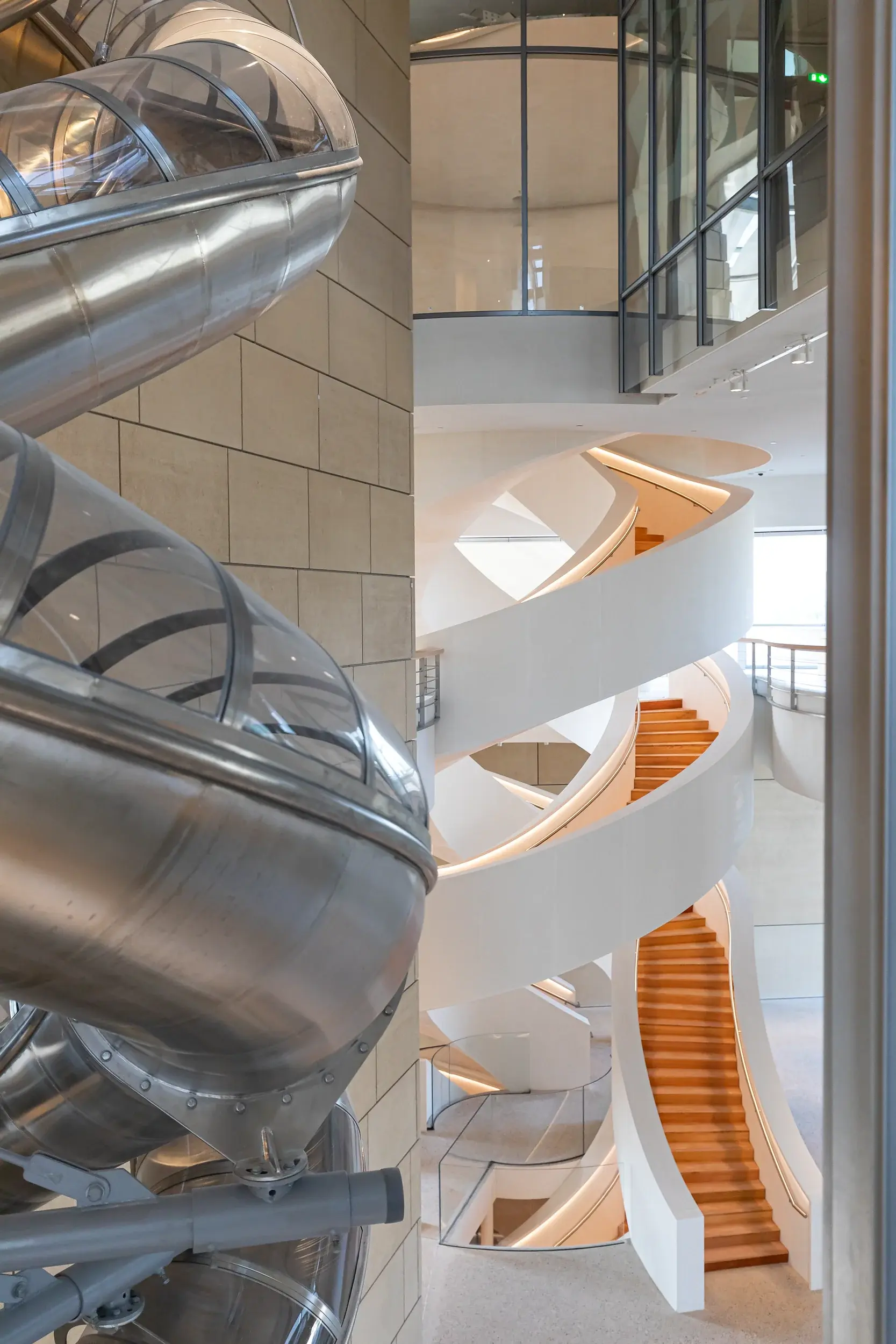
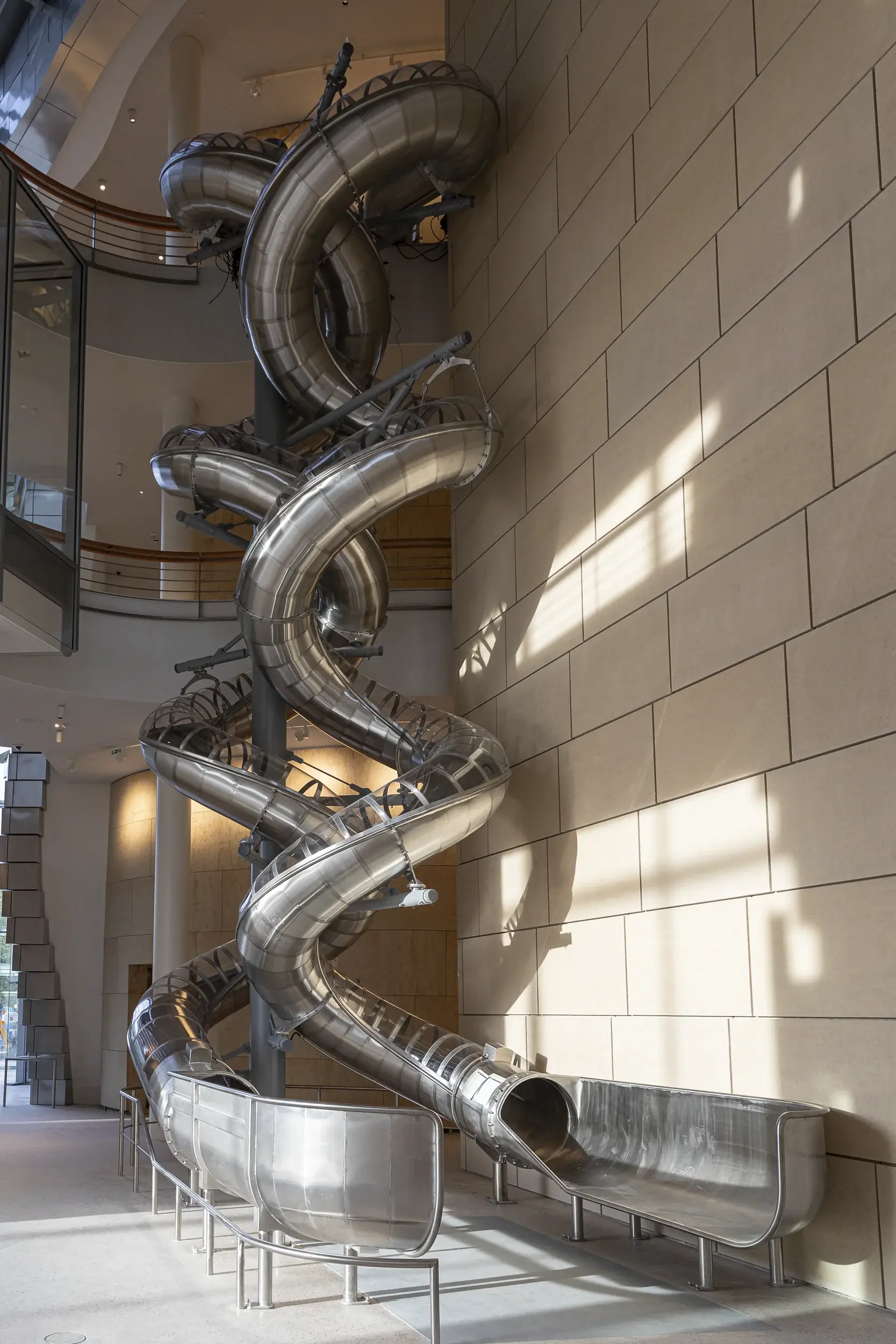
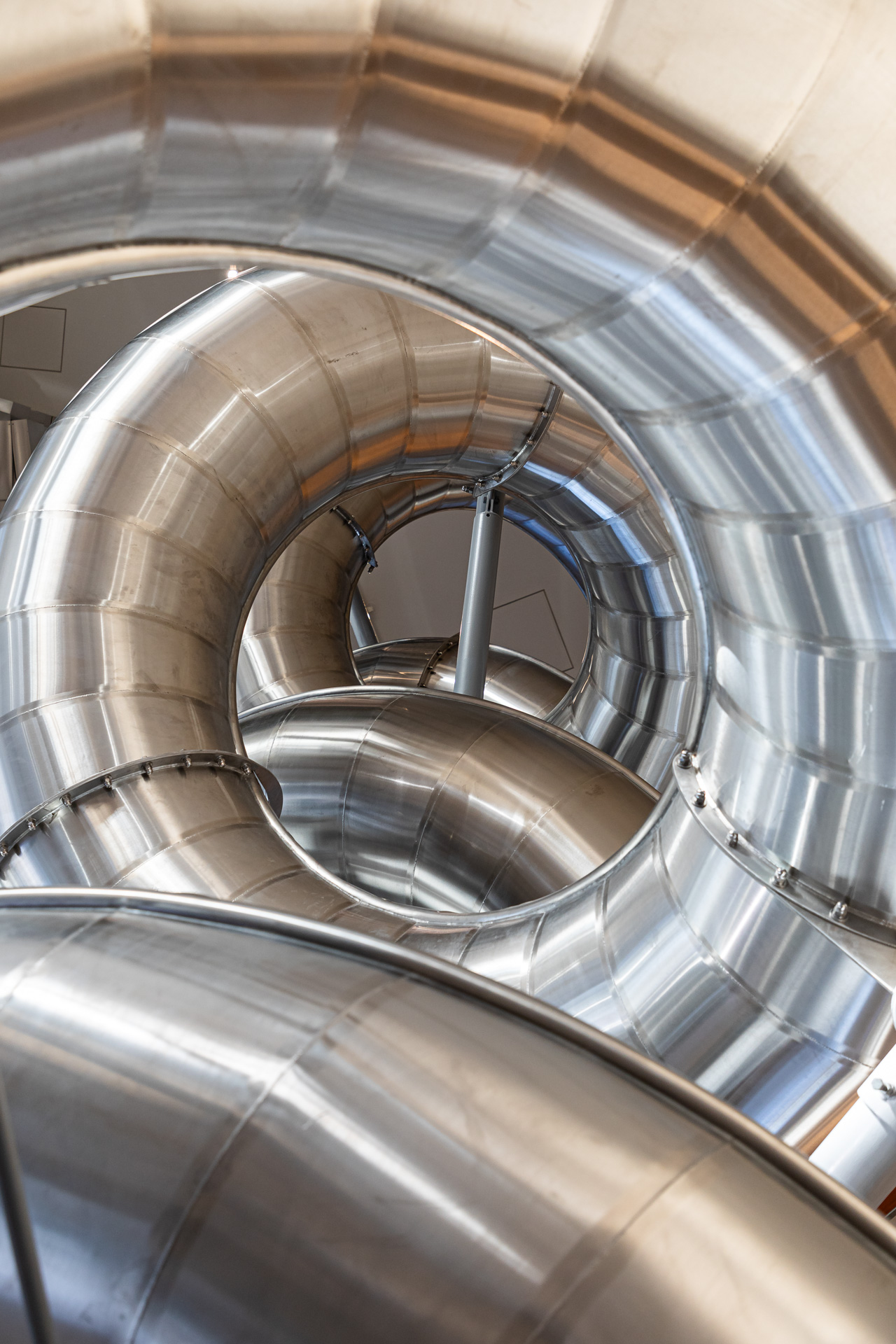
Pictures of the slides
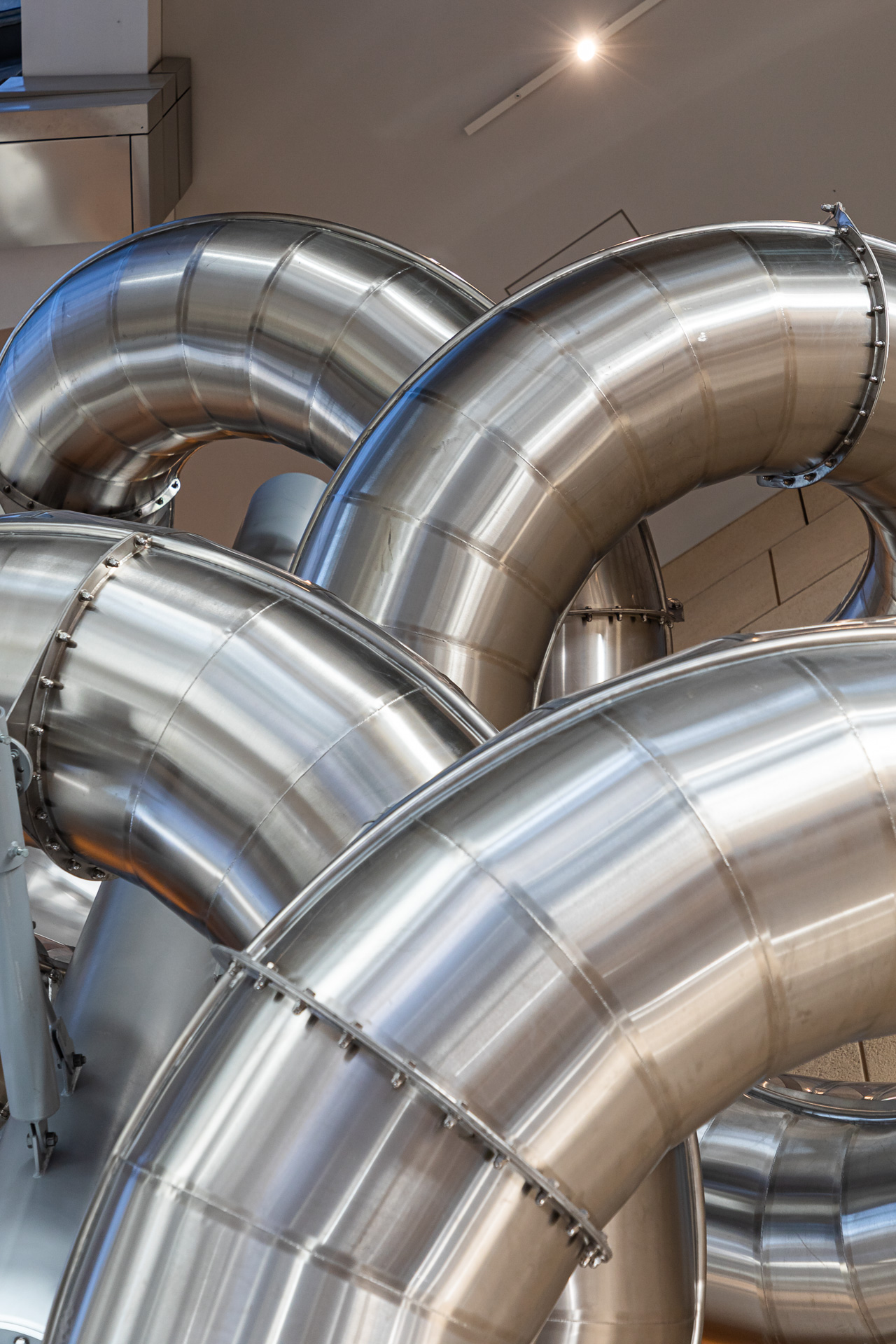
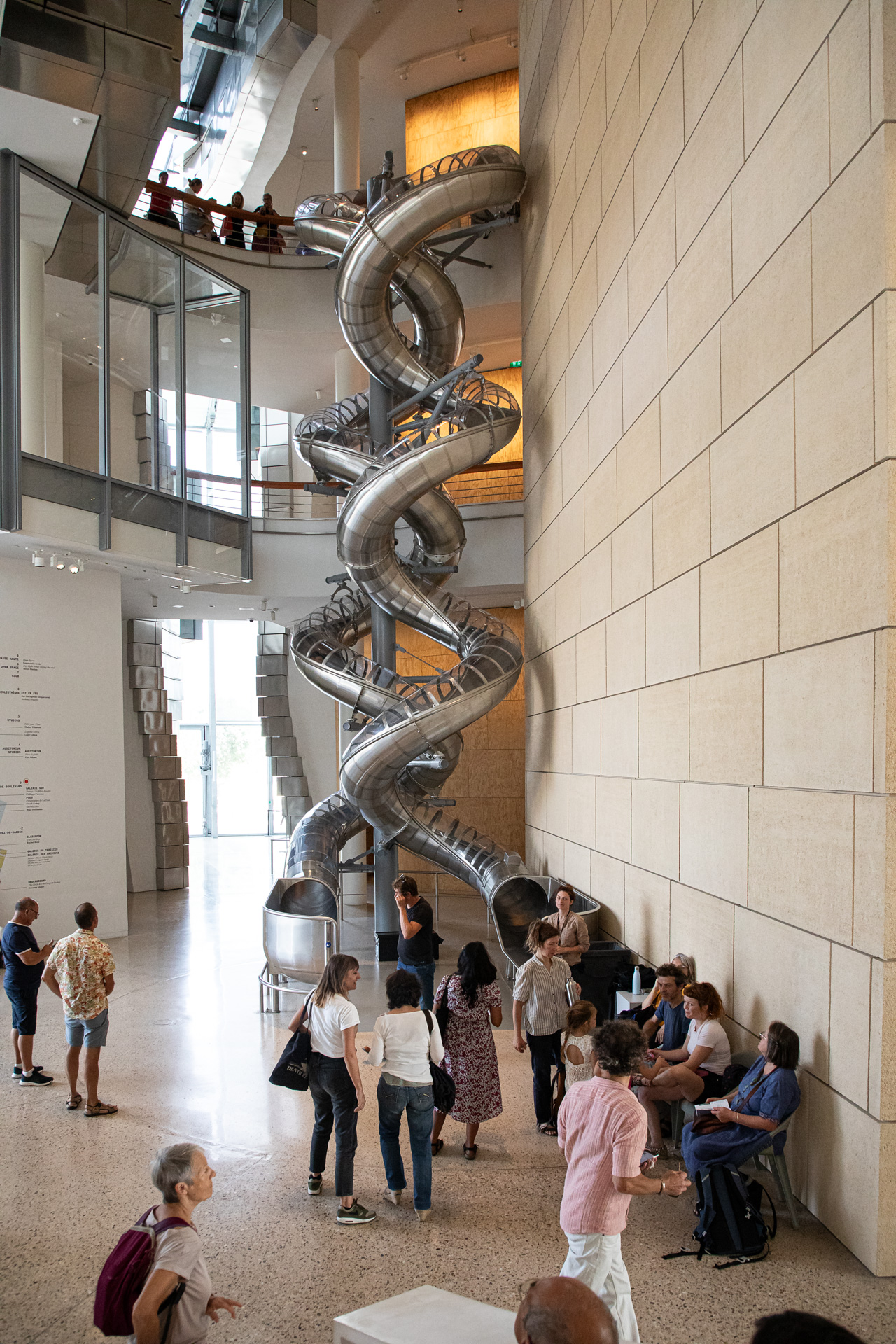


/0435%20-%20CARSTEN%20H%C3%96LLER%20-%20NO%20KILL%20-%20JUNE%2014%202019-1.jpg)
Carsten Höller
Carsten Höller uses his training as a scientist in his work as an artist, concentrating particularly on the nature of human relationships. Born in Brussels in 1961, he now lives and works in Stockholm, Sweden and Biriwa, Ghana. His major installations include Test Site, a series of giant slides for Tate Modern’s Turbine Hall (2006); Amusement Park, an installation of full-size funfair rides turning and moving at very slow speed at MASS MoCA, North Adams, USA (2006); Flying Machine (1996), a work which hoists the viewer through the air; Upside-Down Goggles, an experiment with goggles which modify vision; and the famous The Double Club (2008-2009) in London, which opened in November 2008 and closed in July 2009, that took the form of a bar, restaurant and nightclub designed to create a dialogue between Congolese and Western culture.
His Revolving Hotel Room (2008), a rotating art installation that becomes a fully operational hotel room at night, was shown as part of theanyspacewhatever exhibition at the Guggenheim Museum in 2009. For his 2015 exhibition Decision at the Hayward Gallery, he turned the whole building into an experimental parcours with two entrances and four exits, two of them being slides. His works have been shown internationally over the last two decades, including solo exhibitions at Fondazione Prada, Milan (2000), the ICA Boston (2003), Musée d’Art Contemporain, Marseille (2004), Kunsthaus Bregenz, Austria (2008), Museum Boijmans Van Beuningen, Rotterdam (2010), Hamburger Bahnhof, Museum für Gegenwart, Berlin (2011), New Museum, New York (2011) Thyssen-Bornemisza Art Contemporary (TBA21), Vienna (2014), Pirelli HangarBicocca, Milan (2016), Henie Onstad Kunstsenter, Høvikodden, Norway (2017), The Florence Experiment at the Palazzo Strozzi, Florence (2018), Sunday at Museo Tamayo, Mexico City (2019) and most recently the exhibitions Behaviour at Kunsten Museum of Modern Art, Aalborg (2019) and Reproduction at Copenhagen Contemporary, Copenhagen (2019).