Open |
Open from
Closed today
Ticketing
My selection
230424-LUMA-DRONE-ADRIANDEWEERDT-1
Credits

© Adrian Deweerdt

The Parc des Ateliers

Once a Roman necropolis and later an industrial site, the Parc des Ateliers has gradually been transformed into a place dedicated to culture.

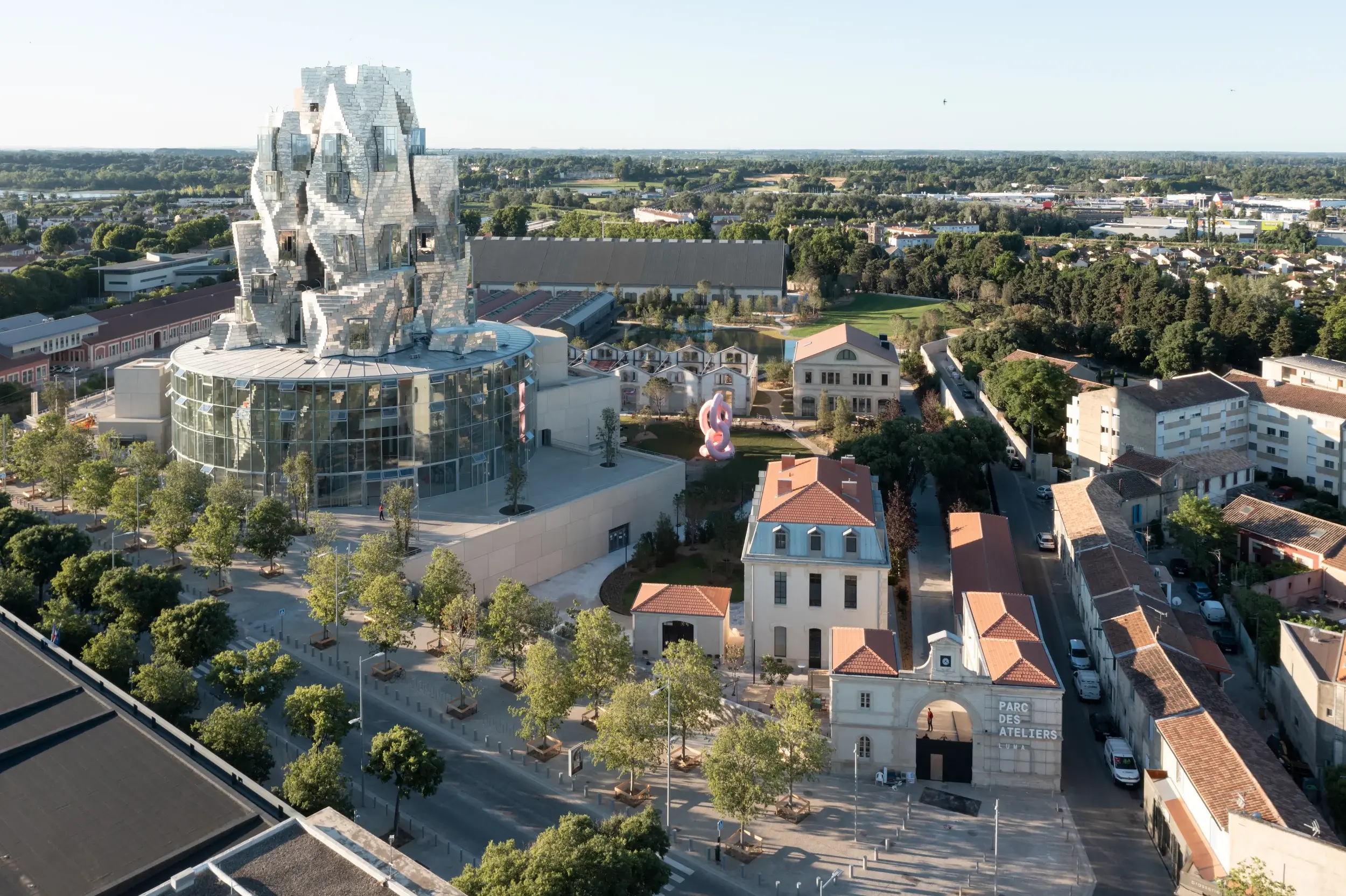
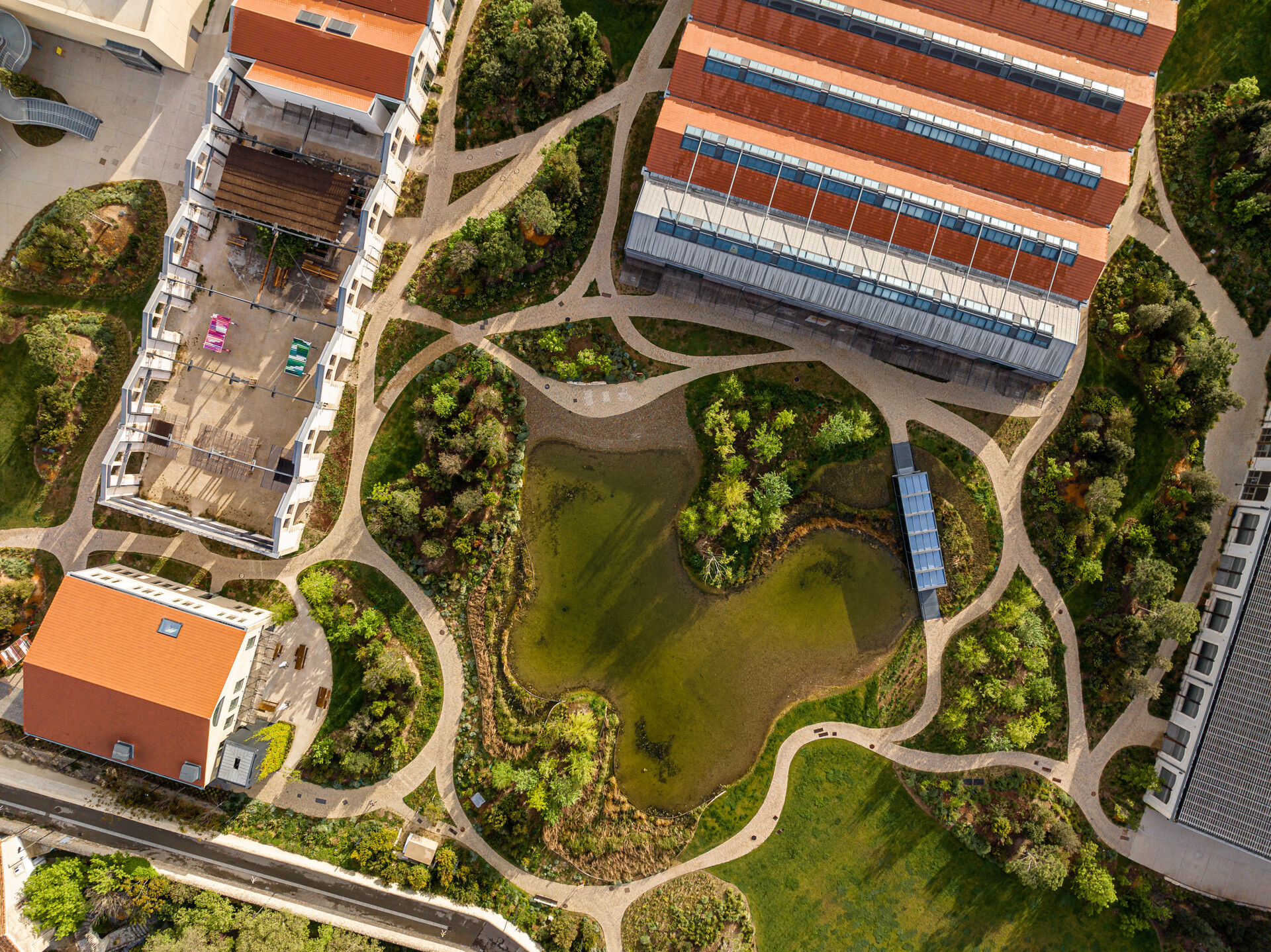
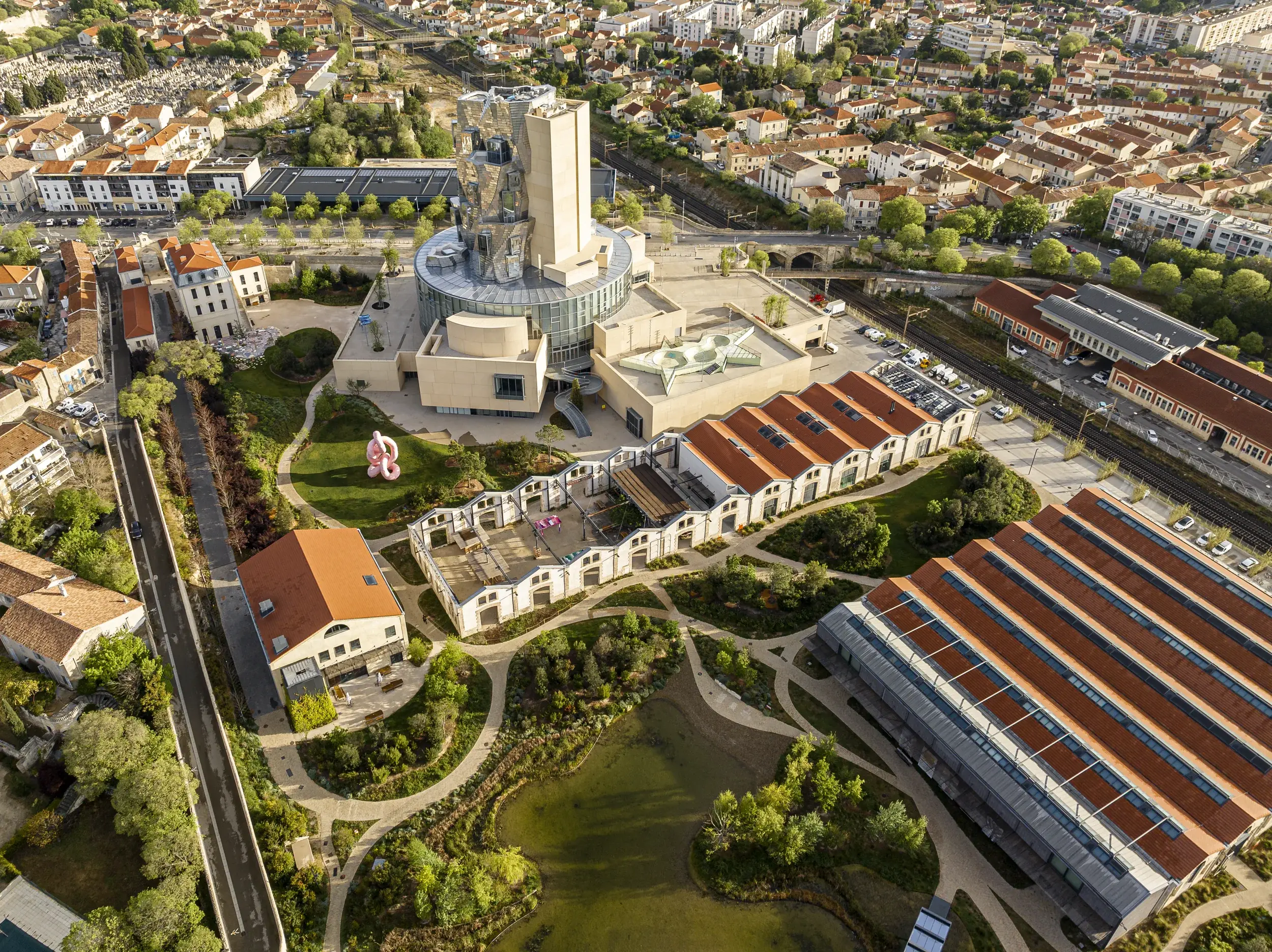
Today, the Parc des Ateliers is home to LUMA Arles’s activities and comprises nine buildings and a landscaped park.

“The Parc des Ateliers is part of the city. It creates a link and a pathway between Arles’s Roman and Romanesque landmarks listed as UNESCO World Heritage sites. It is a place for walking and leisure, but also a place for work, debate, the sharing of knowledge, and production.”

Maja Hoffmann, Founder and President of the LUMA Foundation, and Founder of LUMA Arles


Some information and key figures 

  • Parc des Ateliers site area: 7 hectares 
  • Landscaped park area: 4 hectares  
  • Total number of buildings:
  • Buildings dedicated to exhibitions:
  • Restaurants and cafés:


230620-LUMA-DRONE-ADRIANDEWEERDT-118 - 1920 x 1439

Aerial view of Arles: the Roman arena in the foreground, with The Tower and part of La Grande Halle in the background, both part of the Parc des Ateliers.
Photo: © Adrian Deweerdt

The Parc des Ateliers before LUMA Arles

A site shaped by the Industrial Revolution

Built between 1844 and 1856, the Parc des Ateliers was originally a site for the construction and repair of steam locomotives, operated by the PLM railway company (Paris-Lyon-Méditerranée), which later became the SNCF in 1938.

At the end of 1843, the site of the former ancient necropolis of the Alyscamps was selected to host the construction of this major industrial workshop.

By the early 20th century, the Parc des Ateliers had become a key economic engine and the city’s largest employer, with more than 1,800 workers on site.

During World War II, part of the production was halted to meet the demands of armaments manufacturing, and output then began to decline gradually. With the arrival of new electric locomotives, construction and repair techniques evolved. The machinery and tools at the Parc des Ateliers were no longer suited to these changes, and the site entered a period of decline, leading to its permanent closure in 1984.

A cultural renewal supported by the city and its partners


A range of initiatives were undertaken to revitalize the Parc des Ateliers after a long period of inactivity. Beginning in the early 2000s, Les Rencontres d’Arles and Les Suds began occupying the site each summer, with the support of the City of Arles. The city played an active role in enhancing the site by supporting cultural initiatives and participating in institutional partnerships.

These combined efforts and the growing recognition of the site’s potential ultimately led to the establishment of the LUMA Arles project in 2013.

VPIC4262-50

The entrance to the Parc des Ateliers, showing Le Réfectoire and Le Médico-Social before their renovation (2016).
Photo: © Victor & Simon / Victor Picon

LUMA Arles at the Parc des Ateliers

Founded in 2013 by Maja Hoffmann, LUMA Arles is an interdisciplinary creative campus open year-round, where visitors can experience temporary exhibitions, permanent artistic installations, and a wide range of cultural events.

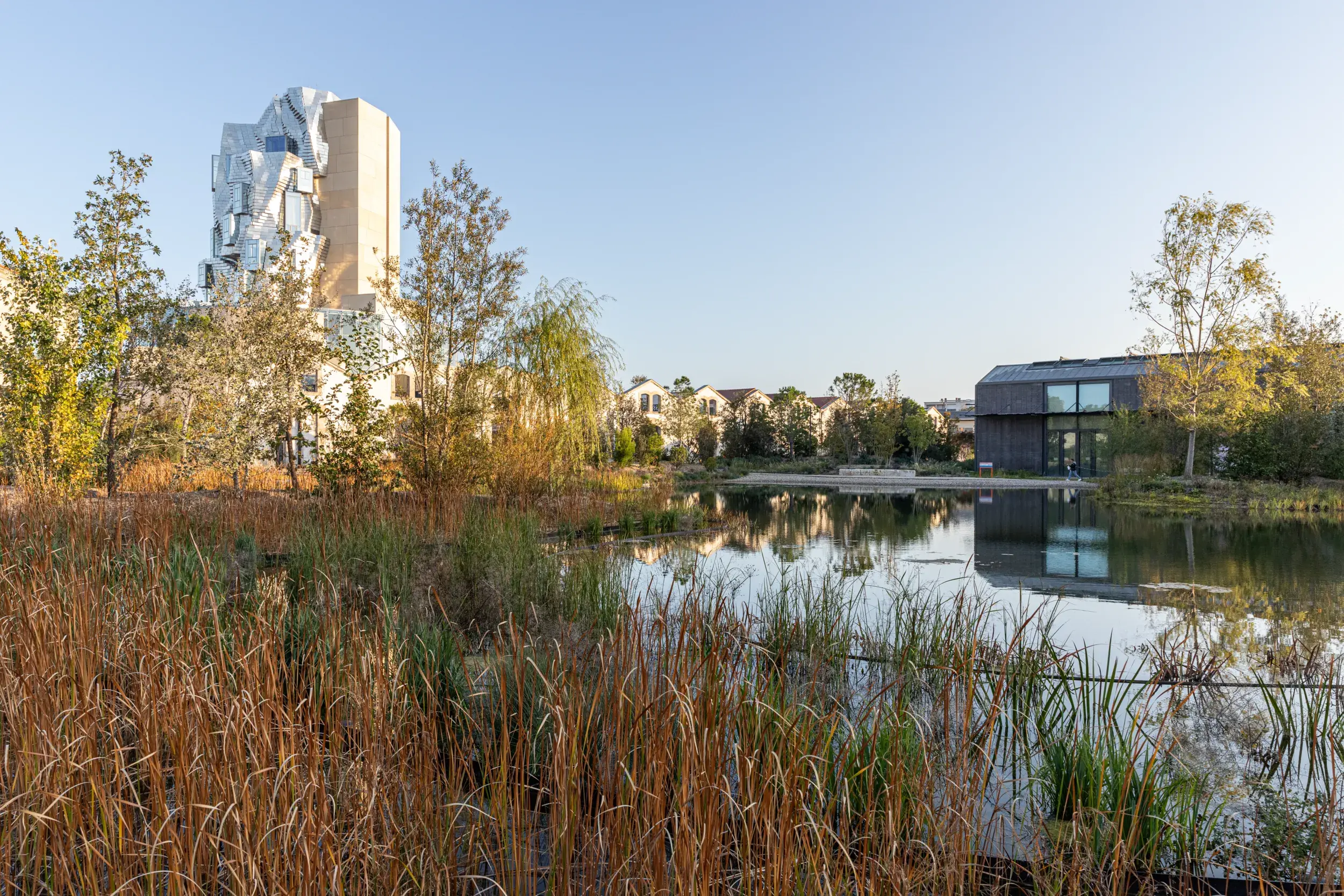
The Parc des Ateliers brings together eight 19th-century industrial buildings renovated by architect Annabelle Selldorf, The Tower designed by Frank Gehry, and a landscaped park created by Bas Smets. The site also includes four restaurants and a hotel.

The rehabilitation of the Parc des Ateliers

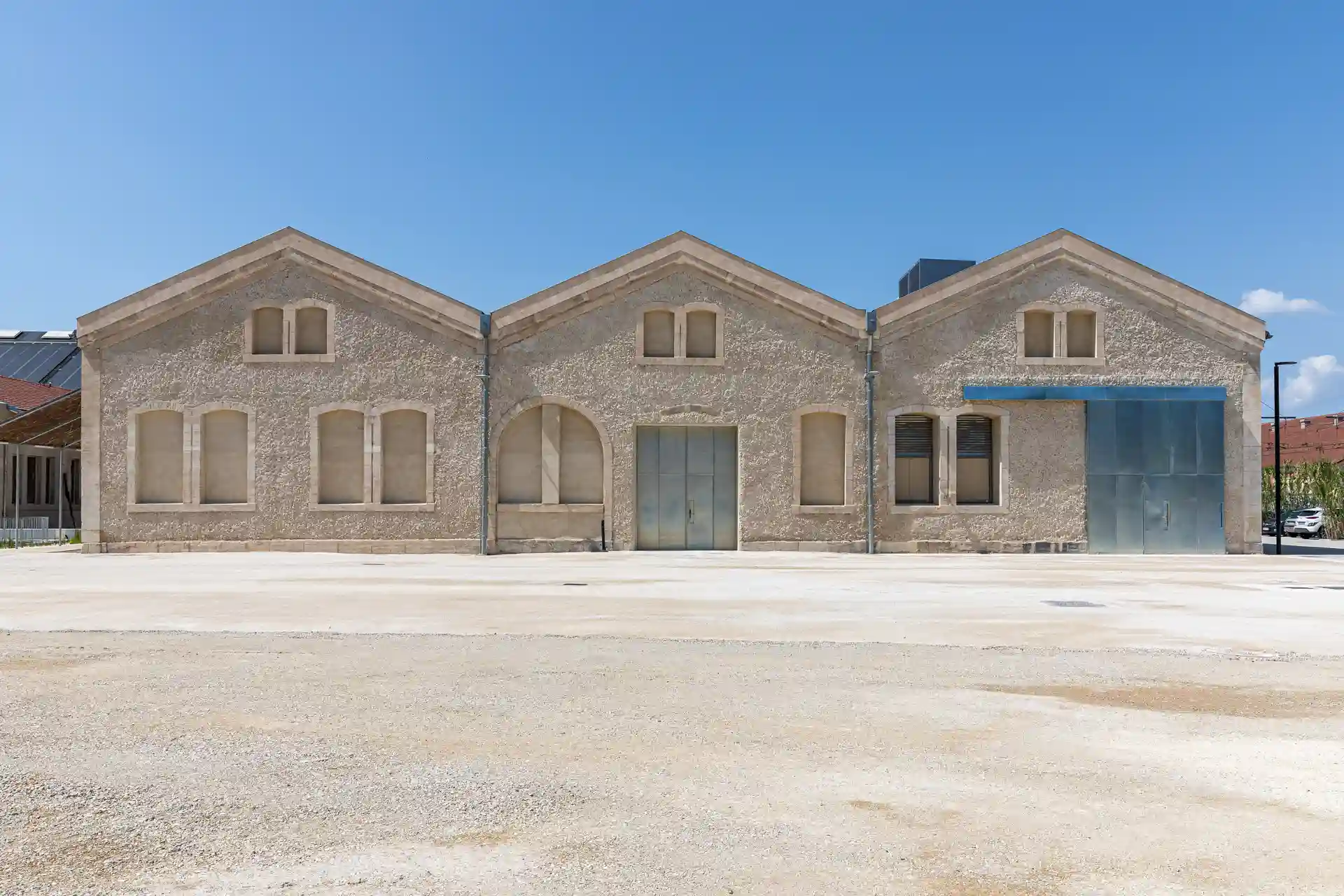
The establishment of LUMA Arles at the Parc des Ateliers marked the beginning of a large-scale transformation of the site. A number of historic industrial buildings were restored by Selldorf Architects, while La Grande Halle was renovated by Moatti & Rivière.

Construction of The Tower, conceived by Maja Hoffmann in collaboration with Frank Gehry, began in 2014 and was completed in 2021.

The landscaped park designed by Bas Smets, first introduced through a prototype in 2017, was completed in 2021. It integrates a range of artworks, sculptures and installations.

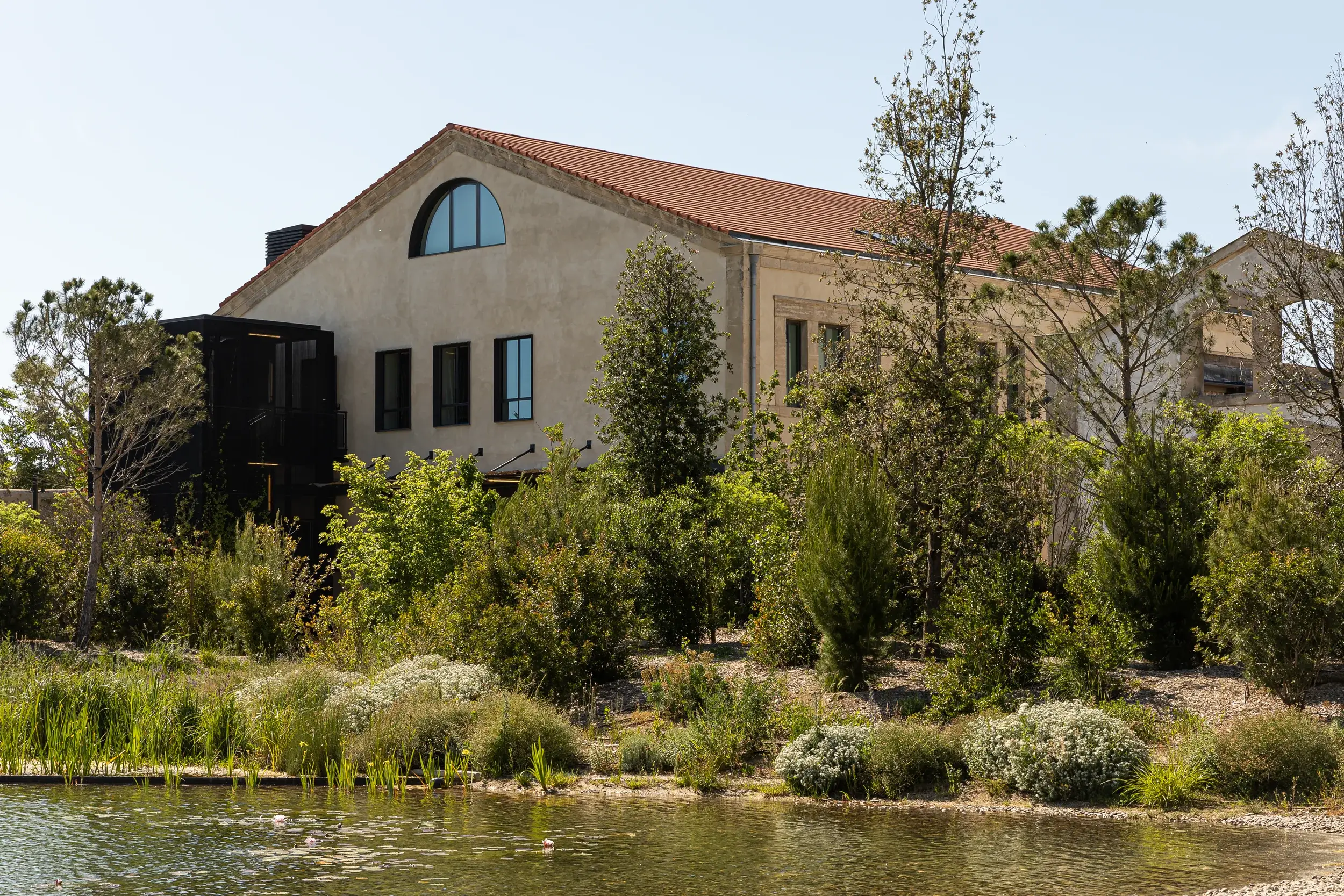
Le Magasin Électrique, renovated in 2023 by Atelier LUMA in collaboration with BC architects & studies and Assemble, reflects a bioregional architectural approach based on the use of locally sourced natural materials.

La Lampisterie was the most recent building to be renovated, in 2024.

2009.24.955

Aerial image of the Parc des Ateliers when it was operated by the PLM railway company. 
Photo: © Pierre Brocarel-Cd13, Museon Arlaten-musée de Provence

250619-LUMA-DRONE-ADRIANDEWEERDT-118 (1)

Aerial image of the Parc des Ateliers after the site’s complete rehabilitation by LUMA Arles.
Photo: © Adrian Deweerdt

The buildings of the Parc des Ateliers 
 

The nine buildings of the Parc des Ateliers vary in scale and volume, allowing LUMA Arles to host exhibitions and events as well as spaces for daily life, work, and creation. The site also includes a design research laboratory, an artist residence, a hotel, and four restaurants.

The Tower

Conceived by Maja Hoffmann in collaboration with architect Frank Gehry, The Tower houses exhibition spaces, studios, an auditorium, permanent artworks, the Drum Café—a restaurant-café—event spaces, offices, and several panoramic terraces.

Les Forges and the Cour des Forges

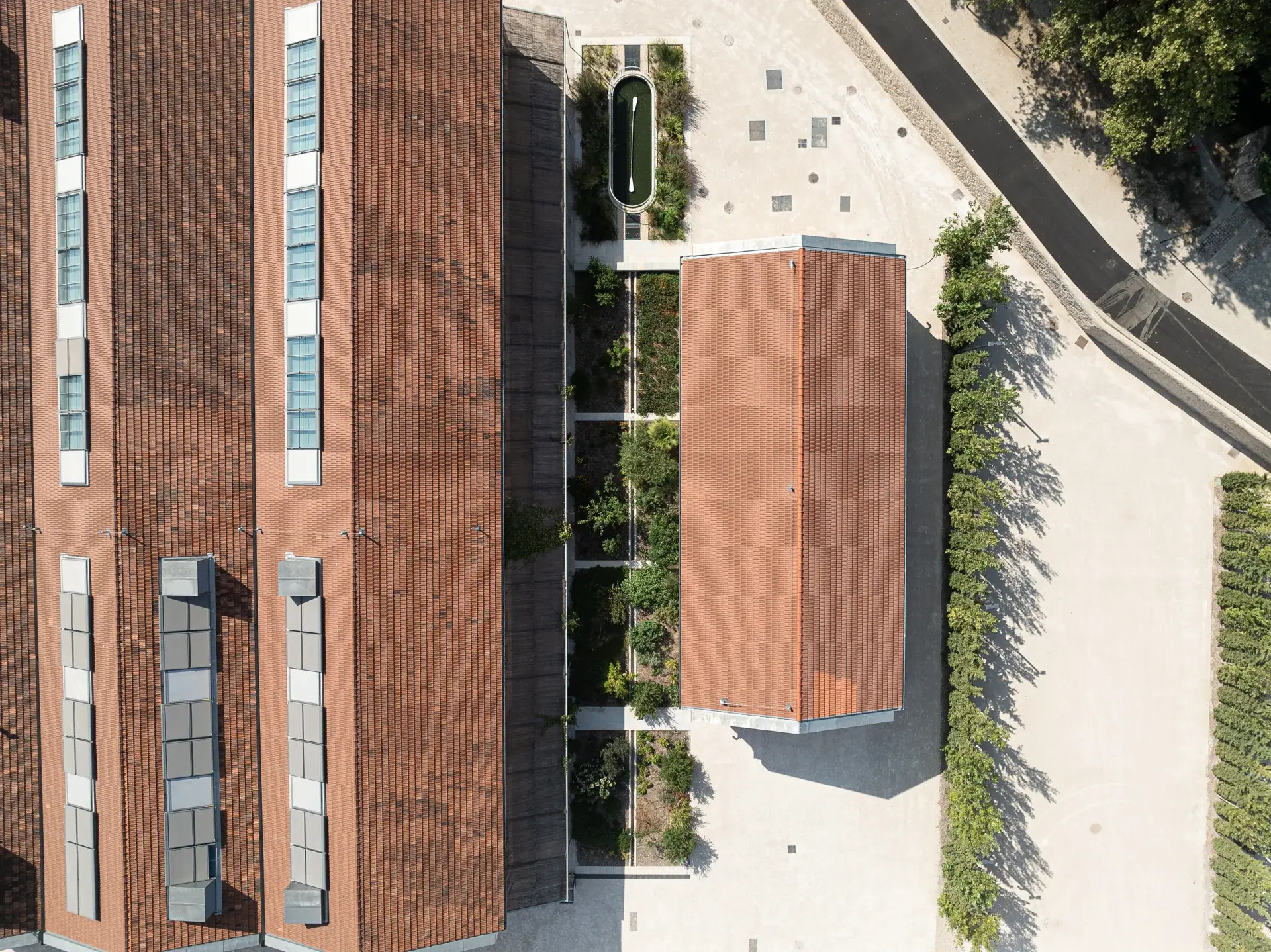
Les Forges and the Cour des Forges are dedicated to exhibitions and performances. They also function as social spaces, including a restaurant and an herb garden.

La Mécanique Générale

La Mécanique Générale features a large exhibition space and also houses offices. 

La Grande Halle

La Grande Halle is reserved for large-scale exhibitions and events.

Le Magasin Électrique

Le Magasin Électrique includes offices and workspaces for Atelier LUMA, the design research laboratory. It also contains an exhibition space. 

La Lampisterie

La Lampisterie is used as an exhibition space.

La Formation

La Formation is dedicated to live performance, artist residencies, and educational workshops.

Le Réfectoire

Le Réfectoire is a restaurant for visitors.

Le Médico-Social

Le Médico-Social, converted into a hotel in 2021, also houses the Café du Parc, a restaurant located on the ground floor. 

220706-LUMA-PPAYSAGER-ADRIANDEWEERDT-05 - 1280 x 1920

The “Médico-Social” building.
Some of the historic industrial buildings have retained their original names, inherited from their use under the PLM railway company, in order to preserve the memory of their initial function. Their rehabilitation was carried out with respect for their architecture, preserving as many original elements as possible.

Photo: © Adrian Deweerdt

Le Parc des Ateliers, avant l'exploitation de la PLM et LUMA Arles
 

La nécropole des Alyscamps 

Le Parc des Ateliers se trouve sur un site historique d'une grande richesse, faisant partie de la nécropole romaine des Alyscamps. Ce lieu emblématique, classé au Patrimoine Mondial de l’UNESCO, était autrefois un important cimetière antique, dont les vestiges remontent à la période romaine et chrétienne. La nécropole des Alyscamps est connue pour ses impressionnantes rangées de sarcophages et ses chapelles. 

Elle a été immortalisée par Vincent van Gogh lors de son séjour à Arles en 1888, dans plusieurs de ses célèbres œuvres, notamment Les Alyscamps

Bien qu’une partie des Alyscamps soit toujours visible aujourd'hui, la zone où se trouve le Parc des Ateliers a été transformée au fil du temps.

Au XIXe siècle, les normes de construction et de conservation du patrimoine étaient différentes de celles d’aujourd’hui, ce qui a permis à Paris-Lyon-Méditerranée (aujourd’hui la SNCF) d’édifier le Parc des Ateliers sur une partie de la nécropole des Alyscamps. 

2017-07-07_DIVERSE-4763

L’église Saint-Honorat, sur le site des Alyscamps, un édifice médiéval resté inachevé.
© Victor Picon

Pictures of the Parc des Ateliers

220511-LUMA-PPAYSAGER-ADRIANDEWEERDT-18
Credits
La Formation
© Adrian Deweerdt
251121-LUMA-PARCPAYSAGER-ADRIANDEWEERDT-2898
Credits
La Grande Halle
© Adrian Deweerdt
220522-LUMA-PARCPAYSAGER-REMIBENALI-014 - Large-1
Credits
© Rémi Bénali
240812-LUMA-AL-JARDIN-DRONE-ADRIANDEWEERDT-5
Credits
La Lampisterie and Le Magasin Électrique
© Adrian Deweerdt
251121-LUMA-PARCPAYSAGER-ADRIANDEWEERDT-2885
Credits
© Adrian Deweerdt
210602-LUMA-OUVERTURE-IWANBAAN-2968
Credits
© Iwan Baan
251121-LUMA-PARCPAYSAGER-ADRIANDEWEERDT-2897
Credits
© Adrian Deweerdt
210531-LUMA-PARCPAYSAGER-REMIBENALI-050
Credits
Les Forges
© Rémi Bénali
230424-LUMA-DRONE-ADRIANDEWEERDT-16
Credits
© Adrian Deweerdt
211025-PPAYSAGER-ADRIANDEWEERDT-03 - Large-1
Credits
© Adrian Deweerdt
230526-LUMA-AL-MELECTRIQUE-ADRIANDEWEERDT-13
Credits
Le Magasin Électrique
© Adrian Deweerdt

Learn more about Annabelle Selldorf, founder of Selldorf Architects

"During my first visit to the LUMA Arles site I understood immediately the power of the site"

Annabelle Selldorf, about the Parc des Ateliers

AS portrait_Christopher Sturman l Trunk Archive

Annabelle Selldorf, founder of Selldorf Architects, responsible for the rehabilitation of La Mécanique Générale, La Formation, Le Médico-Social, Les Forges, and the Cour des Forges.
Photo: © Christopher Sturman

About Selldorf Architects

Selldorf Architects is a 65-person architectural design practice founded by Annabelle Selldorf in New York City in 1988. The firm creates public and private spaces that manifest a clear and modern sensibility to enduring impact. Since its inception, the firm’s guiding principles have been deeply rooted in humanism. At every scale and for every condition, Selldorf Architects designs for the individual experience. As a result, its work is brought to life—and made complete—by those who use it.

Selldorf Architect’s clients include cultural and educational institutions such as the Frick Collection, the Museum of Contemporary Art San Diego, the Clark Art Institute, Brown University, New York University and Neue Galerie New York. In addition, the firm has created numerous galleries for David Zwirner, Hauser & Wirth, and Gladstone Gallery among others, and designed exhibitions for the Whitney Museum, Gagosian Gallery, Frieze Masters and the Venice Art Biennale.

Annabelle Selldorf on the rehabilitation of La Mécanique Générale, La Formation, Le Médico-Social, Les Forges, and the Cour des Forges

"Given the ambitious and creative programming of LUMA we knew first and foremost that the spaces had to be flexible to accommodate works of various scale and mediums.

The existing railroad sheds with their tall ceilings and linear structure had great potential for being re-used in different ways. We began by assessing the state of the existing buildings to evaluate what aspects could be restored or renovated, and which required a new intervention. An earlier fire had damaged much of the roof area of both Les Forges and La Mécanique Générale buildings so we have proposed  a new flat cast tile that is a subtle nod to the original roman clay tiles. The interior exposed steel columns, brackets and trusses have all been preserved and restored. Skylights have been added and up to date gallery lighting installed. To capture the magnificent quality of light in Southern France is vital and we knew it needed to be modulated and controlled so as to enhance the experience of being in the refurbished buildings. Significant attention has been paid to making the buildings sustainable by utilizing practical strategies including natural ventilation and a radiant heating and cooling system. Careful attention to the choice of simple materials allows the spaces to remain intact and quietly authentic.

With every space in the complex we seek to create a balance allowing the 19th century industrial vocabulary to coexist simply with contemporary purpose, all the while creating well-proportioned spaces with controllable natural light and clear circulation."

FAQ: The Parc des Ateliers

Who owns the Parc des Ateliers?

The Parc des Ateliers covers seven hectares within the Ateliers development zone (ZAC des Ateliers). In 2013, the Région Provence–Alpes–Côte d’Azur, through its agency AREA, sold most of these seven hectares to the company Ateliers d’Arles Immobilier, of which Maja Hoffmann is the principal shareholder.

Today, this company owns the Parc des Ateliers, including the renovated historic buildings, The Tower, and the surrounding land, with the exception of the public areas of the garden, which are owned by the City of Arles.


What was previously located on the site of the Parc des Ateliers?

Located near the Via Aurelia, one of the main communication routes of the Roman Empire, the site was once a vast ancient, and later medieval, burial ground, as evidenced by the sarcophagi still visible throughout the Alyscamps.

In the mid-19th century, at the height of the Industrial Revolution, the first workshops of the Paris–Lyon–Marseille railway company (PLM) were built on the very site of the necropolis, unfortunately leading to the destruction of part of these archaeological remains.

A major economic engine for Arles, the site employed up to 1,800 workers at the peak of the Ateliers’ activity around 1920. In 1956, at the time of the Ateliers’ centenary, 700 people were still working on the site. When the SNCF decided to close the workshops permanently in 1984, only 60 employees remained.

When did the SNCF Ateliers close?

The SNCF decided to close the Ateliers in 1984. At that time, only 60 employees remained. Left unused for several years, the buildings on the site gradually fell into significant disrepair.

Is there a place on site dedicated to the memory of railway workers?

Former railway workers have been involved in the project from its earliest stages. LUMA Arles is committed to acknowledging the site’s industrial history and preserving the working-class memory of the Ateliers.

On Tuesday, May 7, 2025, LUMA Arles unveiled a memorial stele dedicated to the railway workers of the Ateliers d’Arles who lost their lives during the two World Wars. For many years located on the SNCF station platform, the stele has now been given a symbolic new setting: facing the Cedar of Liberty, at the heart of the Parc des Ateliers. This initiative was made possible through close collaboration with the SNCF, organizations dedicated to preserving railway workers’ heritage, and the services of the City of Arles.