

Permanent installation
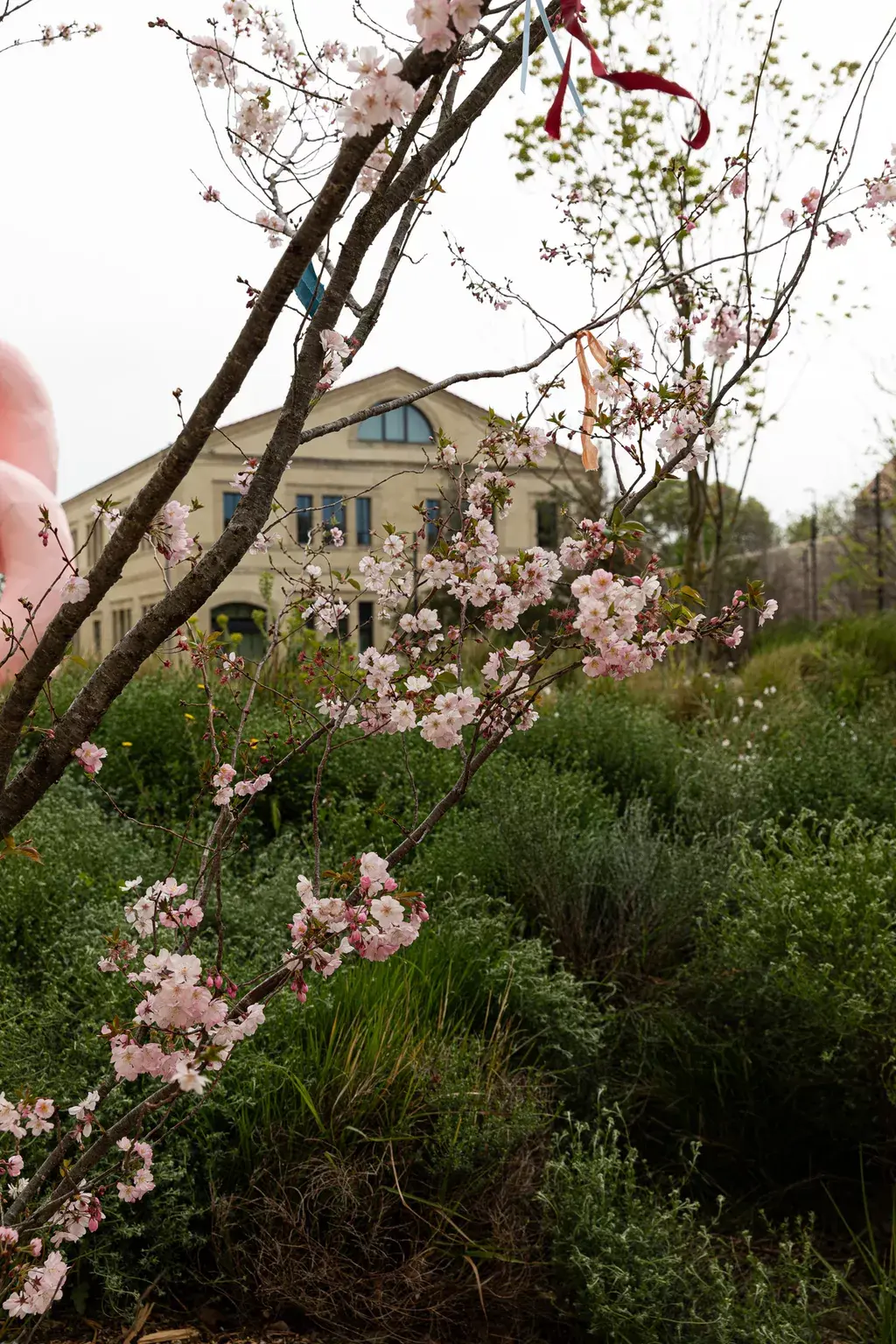
kitsune-tremblement
- Permanent installation
Credits
© Adrian Deweerdt
© Adrian Deweerdt
/A77DB849B49B95966C0DFEA674D194F9.webp)
Dominique Gonzalez-Foerster
Dominique Gonzalez-Foerster was born in 1965 in Strasbourg, France. She studied at École des Beaux-Arts, Grenoble, L’École du Magasin, Centre National d’Art Contemporain de Grenoble and Institut des hautes études en arts plastiques, Paris. The artist lives and works in Paris. She participated in the Venice Biennale in 1990, 1993, 1999, 2003, 2009, and 2019. Gonzalez-Foerster participated in dOCUMENTA(11) in 2002. In 2008, she created TH.2058 as part of The Unilever Series in the Turbine Hall at Tate Modern, London. The artist received the prestigious Marcel Duchamp Award in 2002. Since 1990, Dominique Gonzalez-Foerster has been exploring the different modalities of sensory and cognitive relationship between bodies and spaces, real or fictitious, up to the point of questioning the distance between organic life and work. Metabolizing literary and cinematographic, architectural and musical, scientific and pop references, Dominique Gonzalez-Foerster creates “chambres” and “interiors”, “gardens”, “attractions” and “planets”, with respect to the multiple meanings that these terms take on in the works of Virginia Woolf or Nathaniel Hawthorne, the Brontë sisters or Thomas Pynchon, Joanna Russ or Philip K. Dick. This investigation of spaces extends to a questioning of the implicit neutrality of practices and exhibition spaces. Her “mises en espace”, “anticipations” and “apparitions” seek to invade the sensory domain of the viewers in order to operate intentional changes in their memory and imagination. Haunted by history and future, Gonzalez-Foerster’s works become containers where the artist incubates a form of subjectivity that does not yet exist.