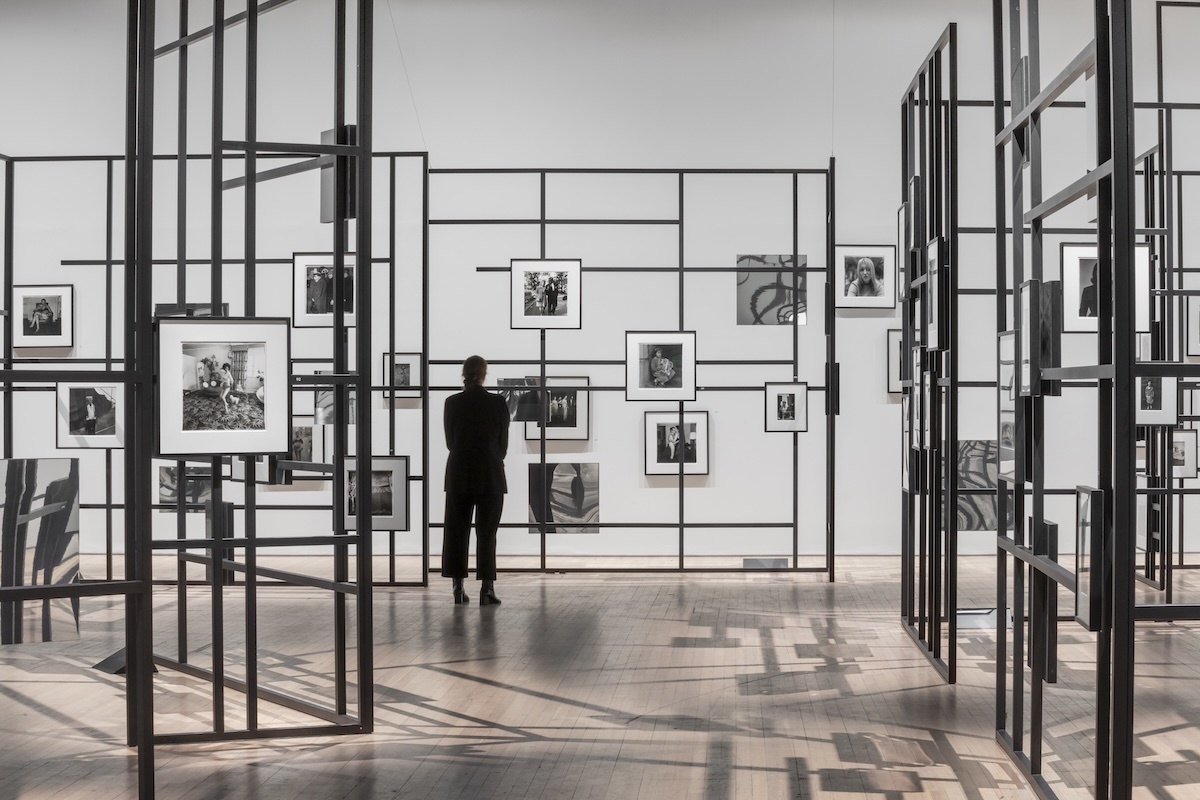
Now showing at LUMA Arles: David Armstrong, Liu Chuang, Maria Lassnig, Philippe Parreno, and Tony Oursler

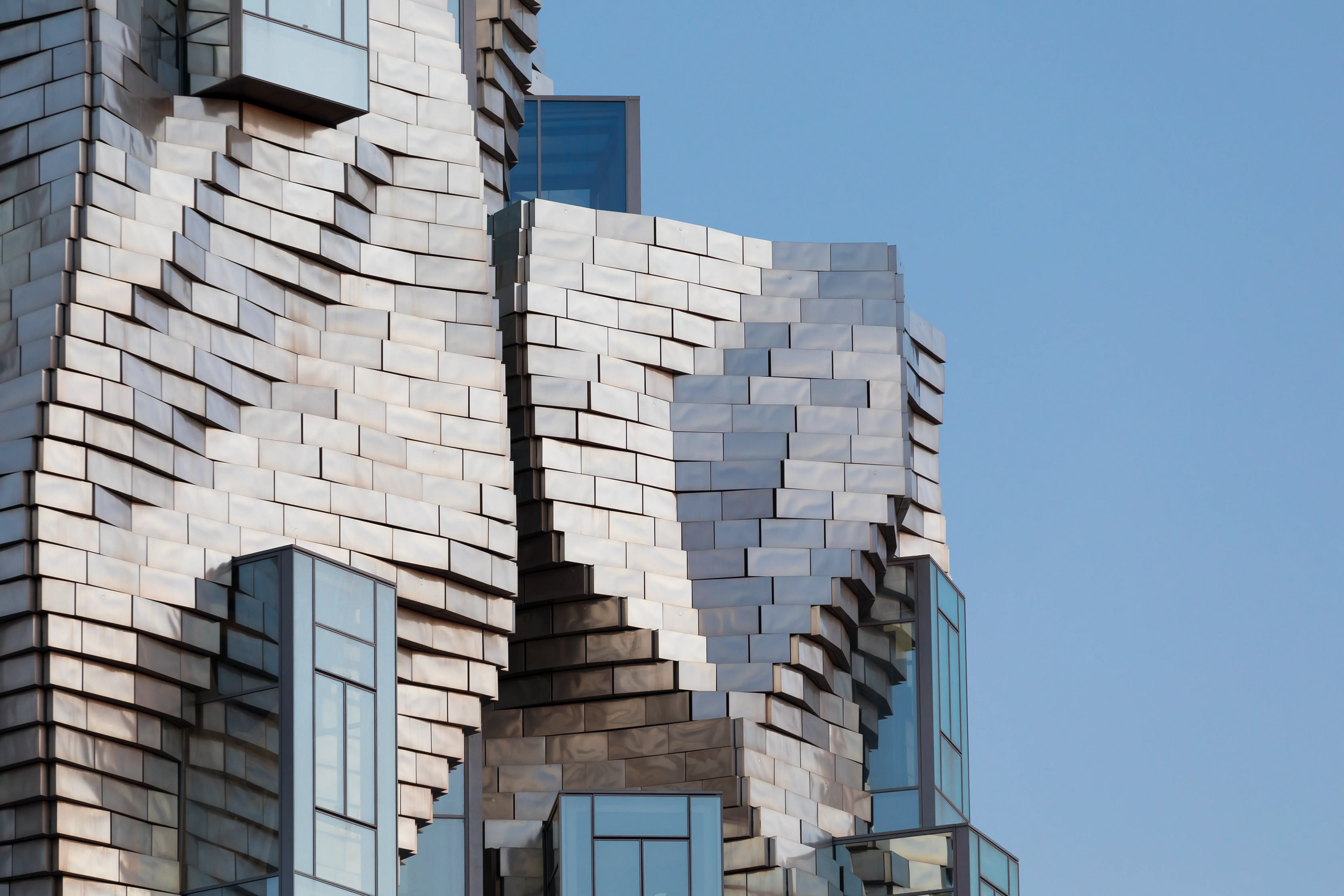
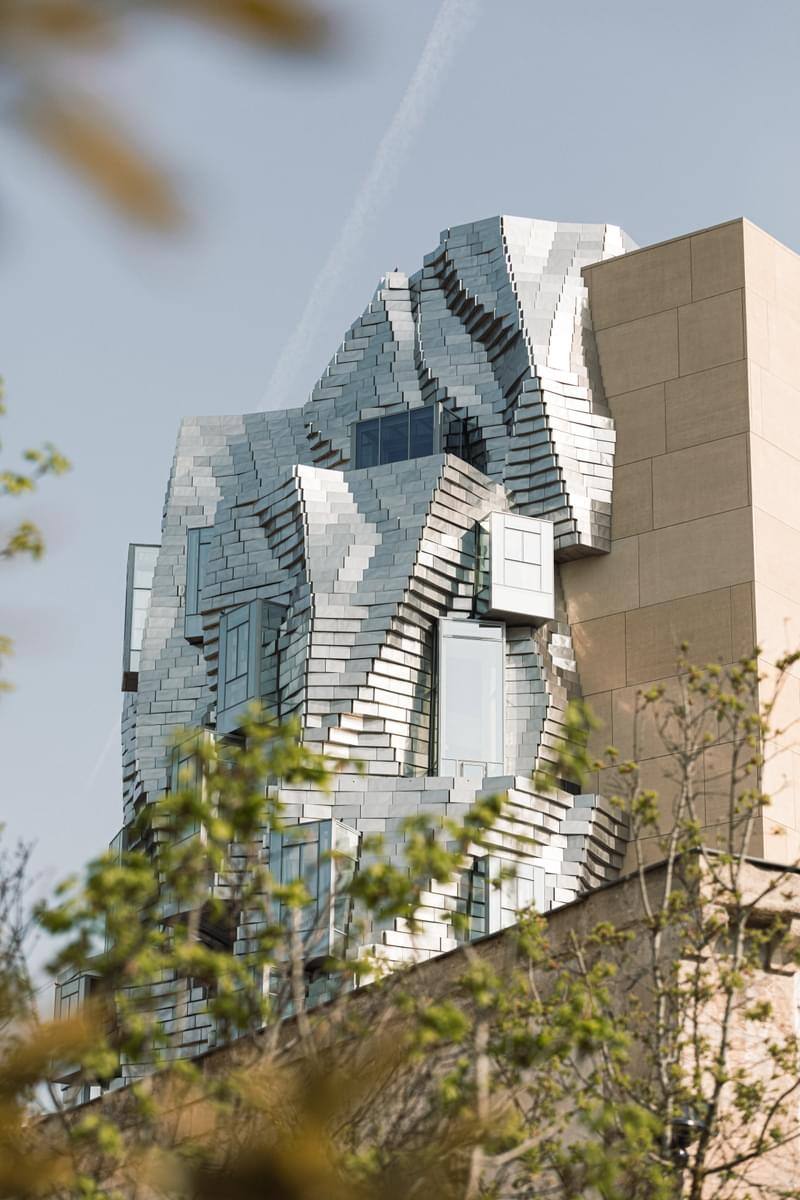
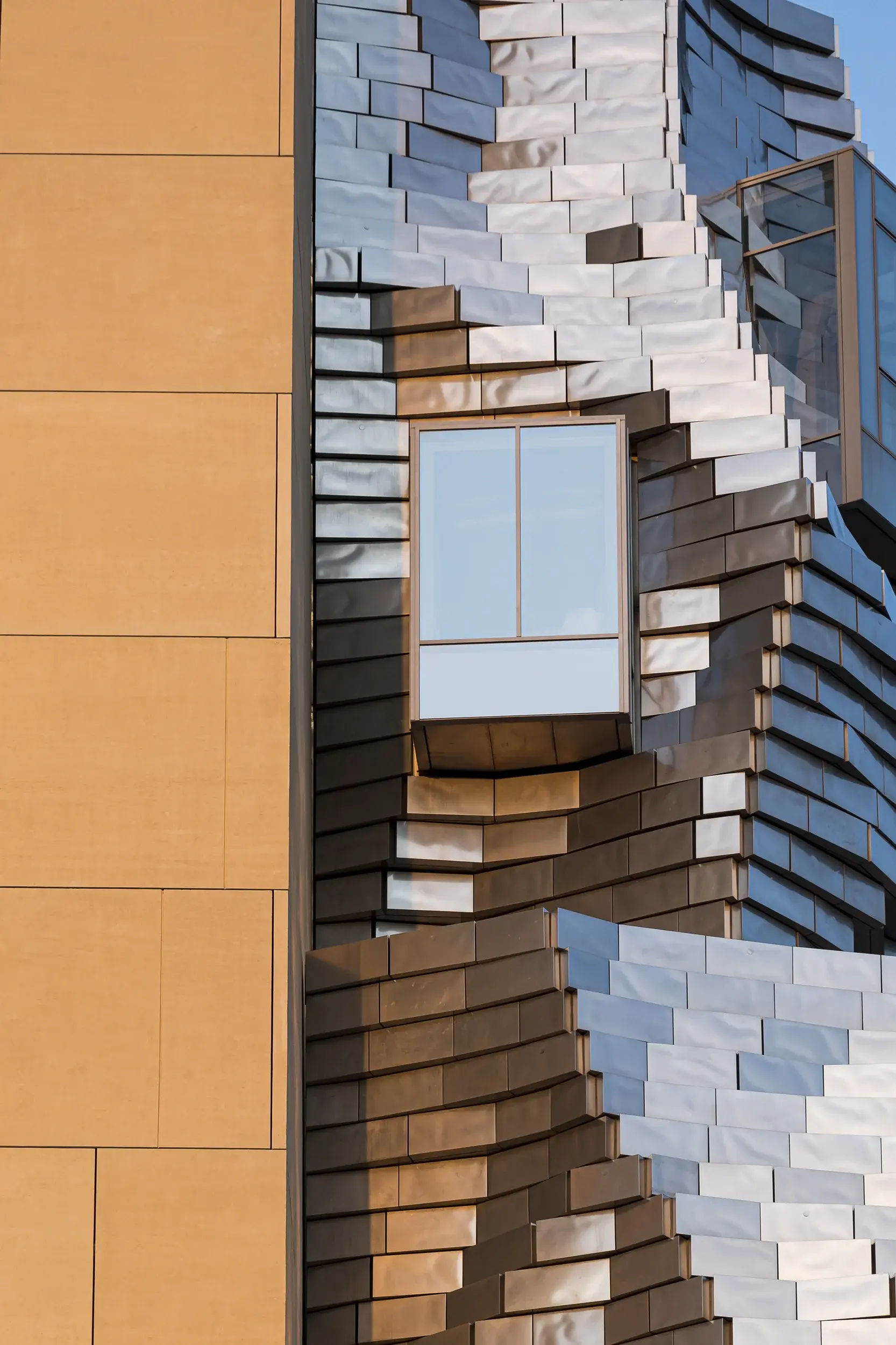
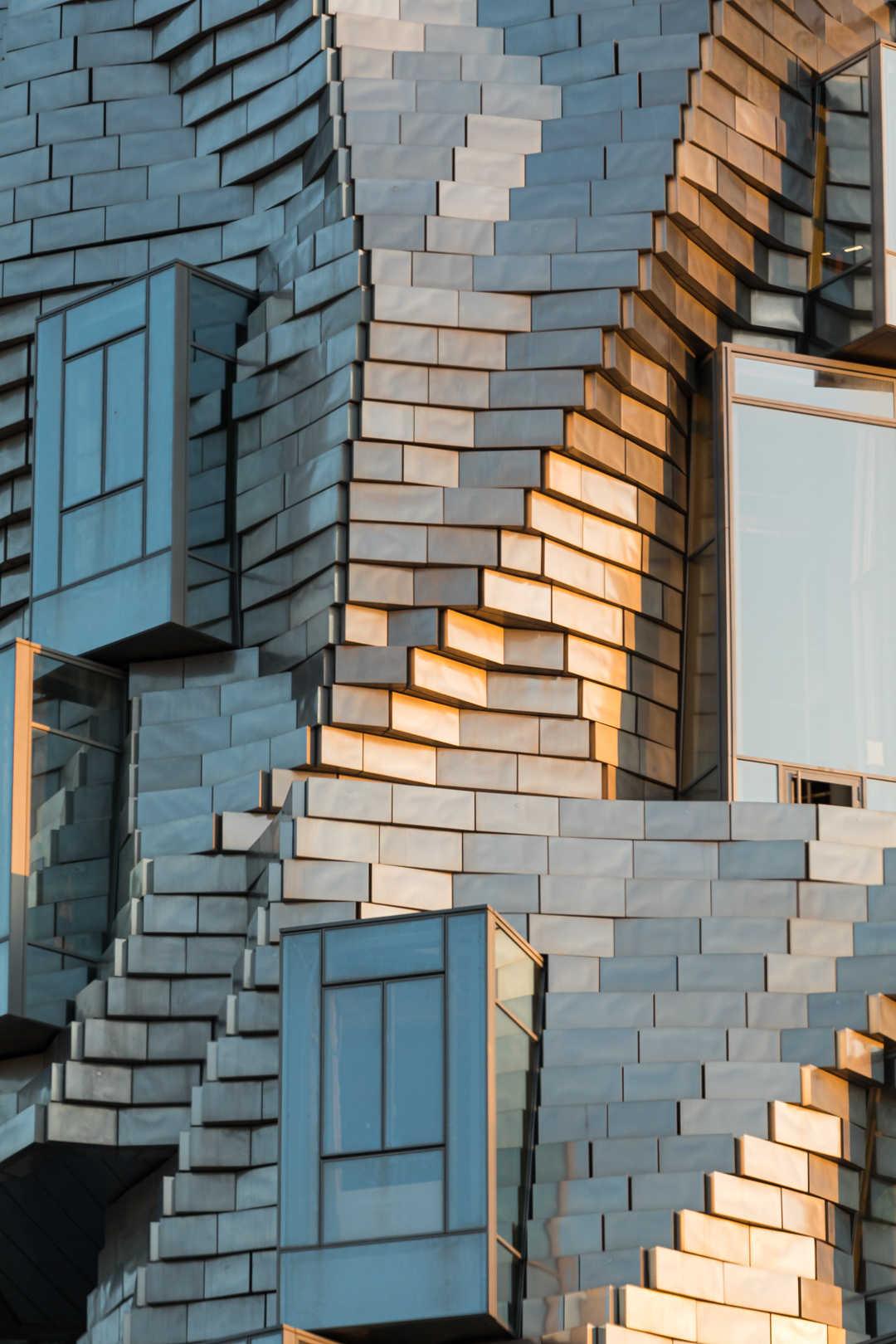
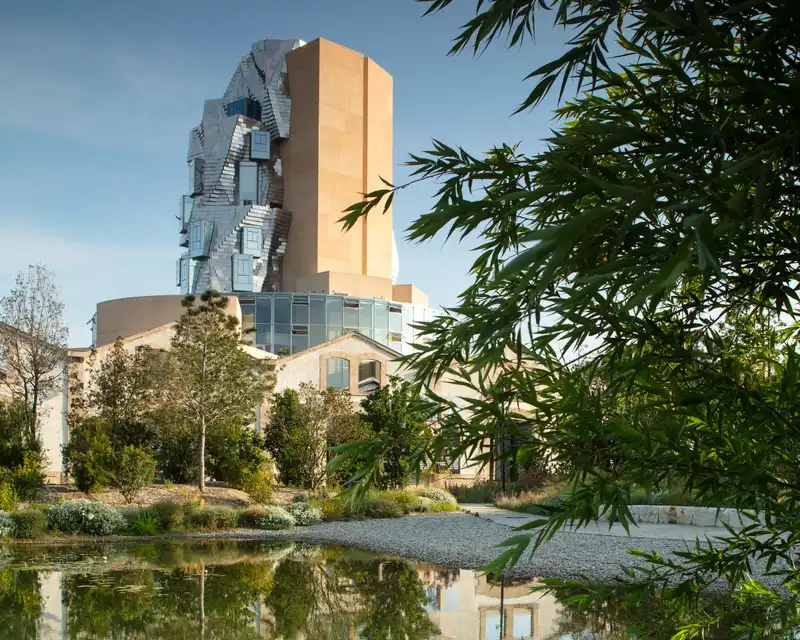
A closer view of The Tower.
© Adrian Deweerdt
The Tower
The Tower was designed by Frank Gehry, in collaboration with Maja Hoffmann.
Architecture and Design of The Tower
Frank Gehry, The Tower Architect
Frank Gehry is one of the defining architects of the late 20th and 21st centuries.
His work is renowned for its deconstructed forms, his pioneering design methods, and his bold use of materials—whether innovative surfaces or intentionally “humble” ones.
With his passing in December 2025, Frank Gehry leaves behind an architectural legacy that reshaped the language of form and redefined the limits of contemporary design.
Vincent van Gogh, the Alpilles, and the Arles Amphitheatre: Gehry’s influences
Frank Gehry’s design for The Tower was inspired by the cultural and natural heritage of Arles. Vincent van Gogh’s singular aesthetic, the sculptural terrain of the Alpilles, and the architecture of the Roman amphitheater can all be seen in the contours of the building.

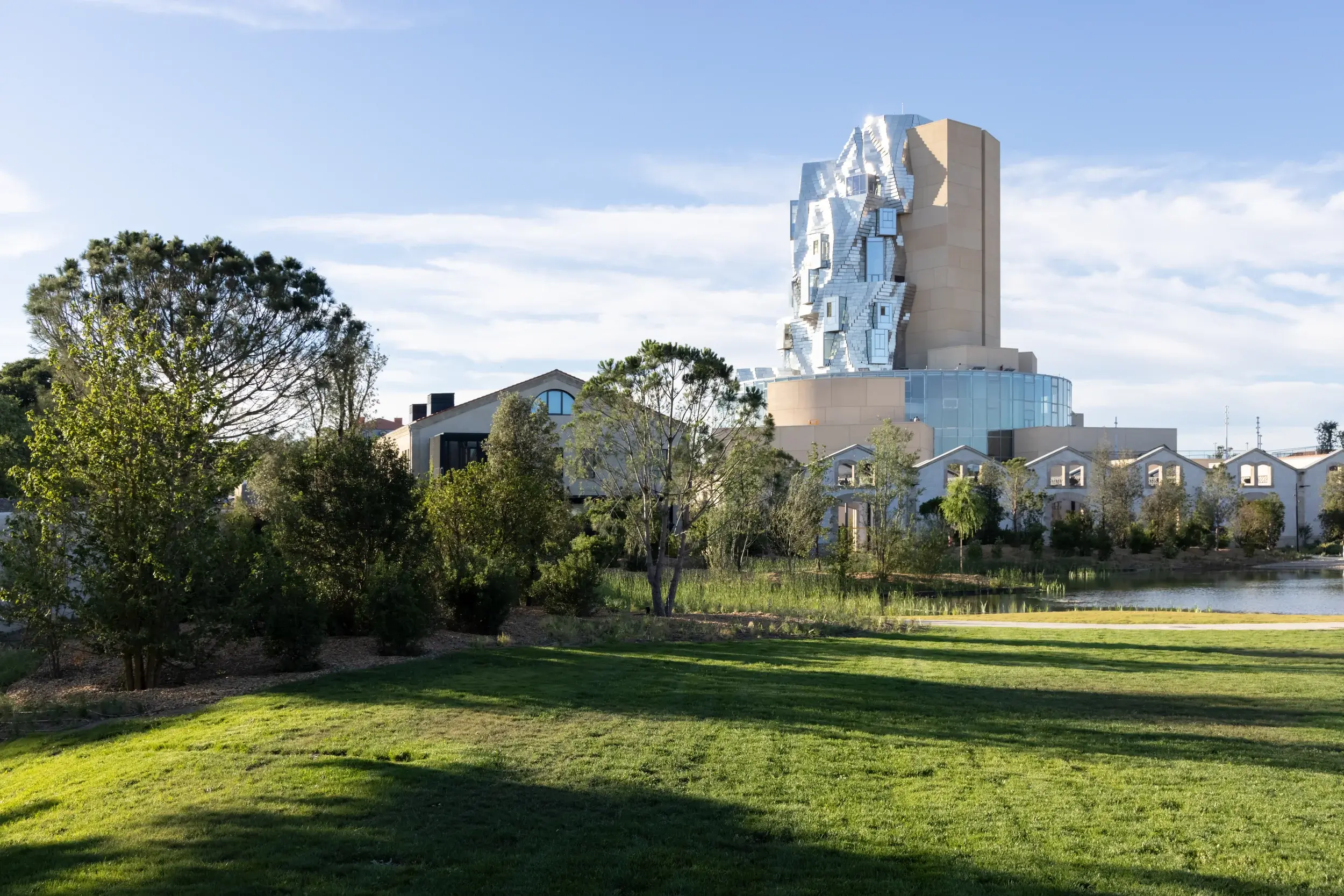
The sculpted façades of The Tower echo the limestone landscapes of the Alpilles, while the glass rotunda at its base draws inspiration from the Arles Amphitheatre.
Photo: © Rémi Bénali
Van Gogh’s light
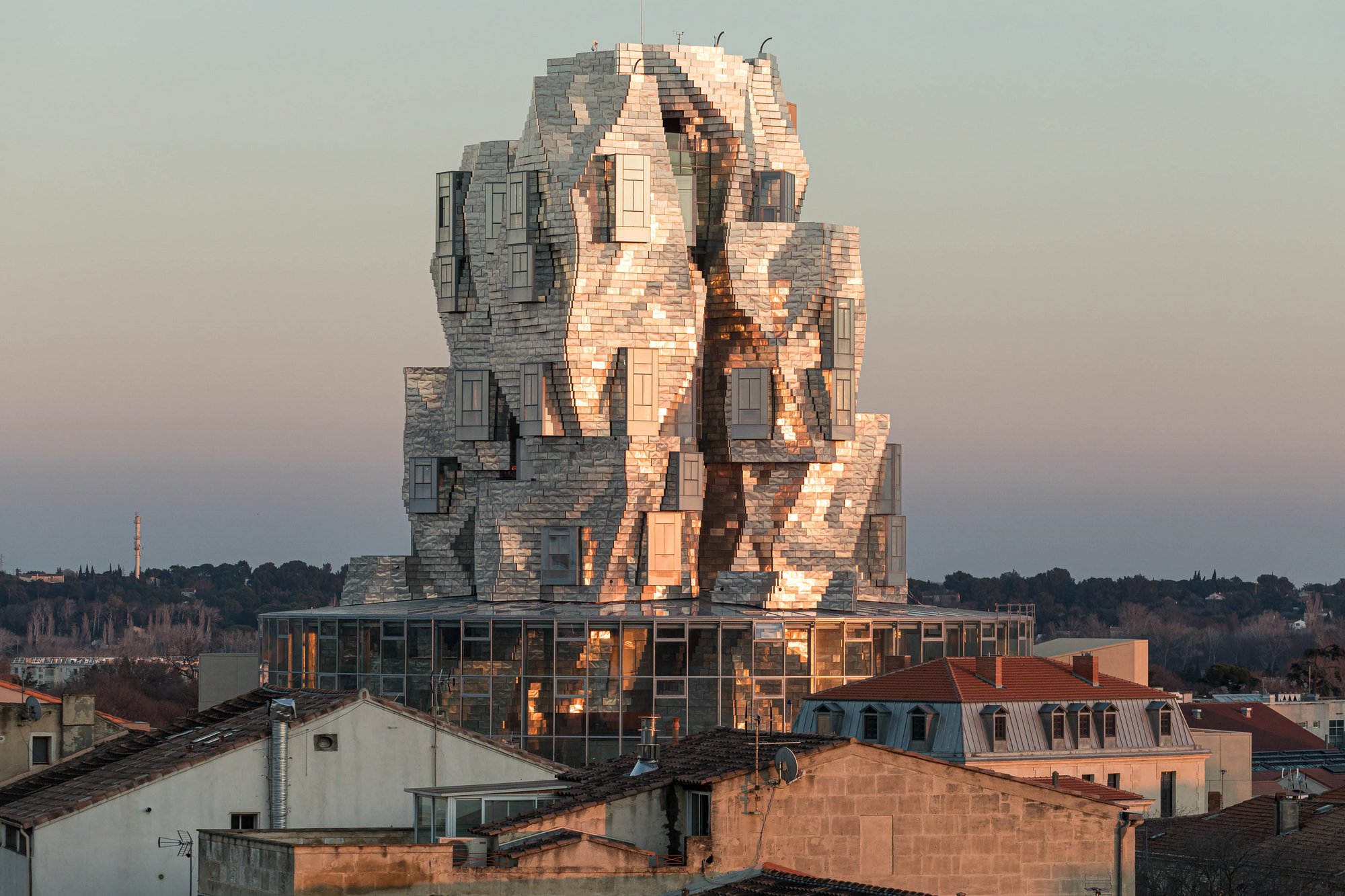
The Tower features twisting façades clad with 11,000 hammered stainless-steel bricks, each one unique and designed for a specific place on the structure. A hallmark of Gehry’s architecture, the metal captures and reflects every shift in daylight, giving the building a constantly changing presence.
As the sun moves across the sky, the façades transition from silvery highlights to warm tones of gold and pink. This choice pays tribute to Van Gogh’s Arles period, when he tirelessly explored the subtle, luminous variations of the Provençal sky.
A mineral architecture inspired by the Alpilles
Frank Gehry also wanted the building to feel mineral—rooted in the rocky landscapes of the Alpilles. The Tower’s outer form and internal structure echo the region’s natural features, particularly the dramatic Val d’Enfer near Les Baux-de-Provence. This approach creates a visual and symbolic link between The Tower and its surroundings, drawing on the textures and rhythms of local stone to anchor the building in its landscape.

The Tower at sunset: its 11,000 hammered-steel bricks catch the day’s final light, shifting into tones of gold and rose.
Photo: © Adrian Deweerdt
/Pages%20%C3%A9dito/La%20Tour/210602-LUMA-OUVERTURE-IWANBAAN-4955%20-%201920%20x%201281.webp)
The Tower’s rotunda (Drum), inspired by the Arles Amphitheatre, forms a vast circular space that is open and filled with light. Measuring 54 meters in diameter and rising between 16 and 18 meters in height, it is wrapped in expansive glass façades that create a continuous dialogue between interior and exterior.
Photo: © Iwan Baan
A rotunda referencing the Arles Amphitheatre
At the base of The Tower, the Drum—a glass rotunda inspired by the Arles Amphitheatre—offers a singular welcome space for visitors, and a first encounter with the richness of Frank Gehry’s architectural language.
In the late 6th century, the Arles Amphitheatre was transformed into a place of habitation, with houses built inside the monument itself. Frank Gehry drew on this history when designing the Drum, seeking to evoke a space that is both open and warm. Its scale, geometry, and atmosphere recall the spirit of Roman amphitheatres.
A dialogue between architecture and place
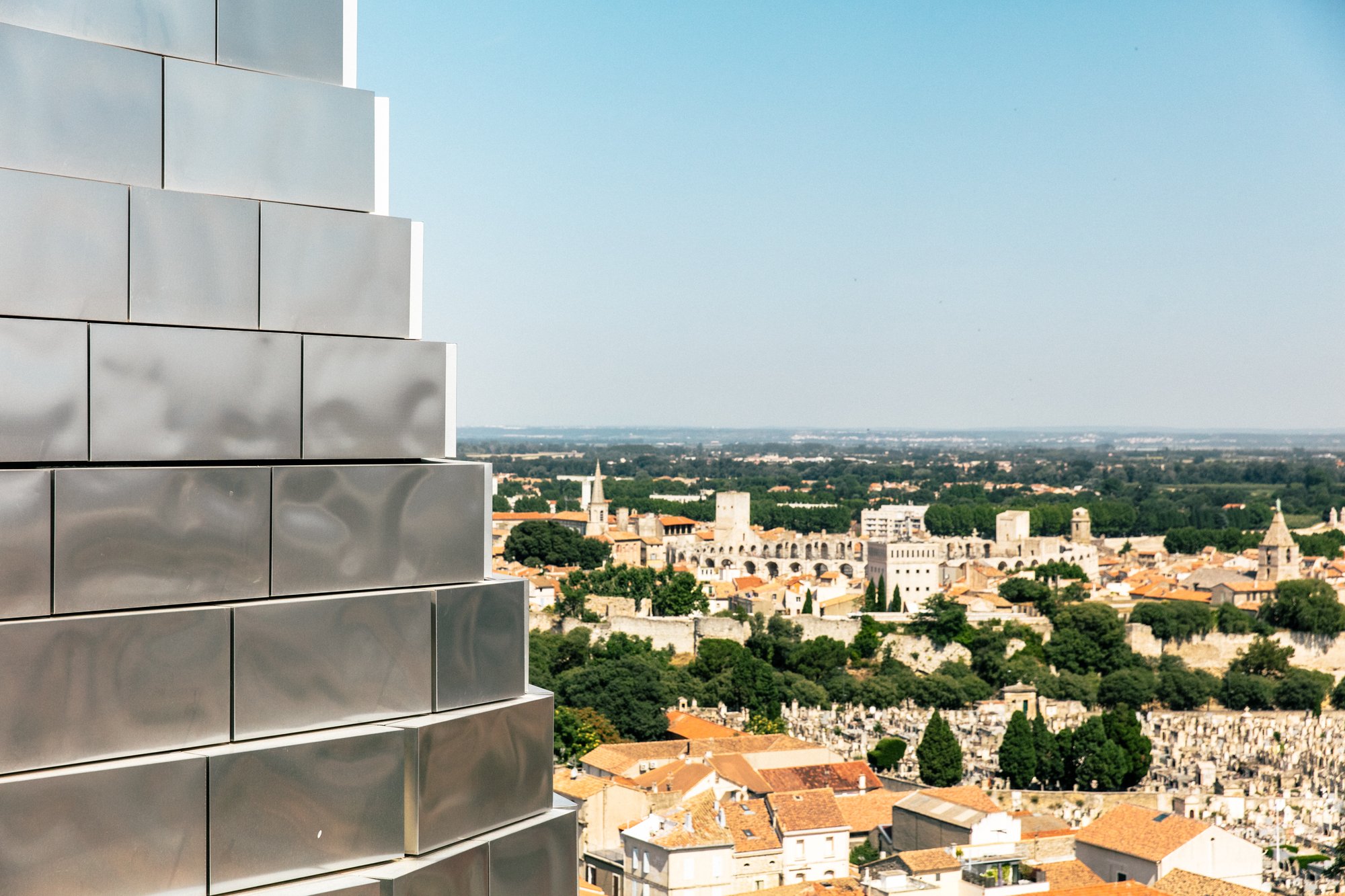
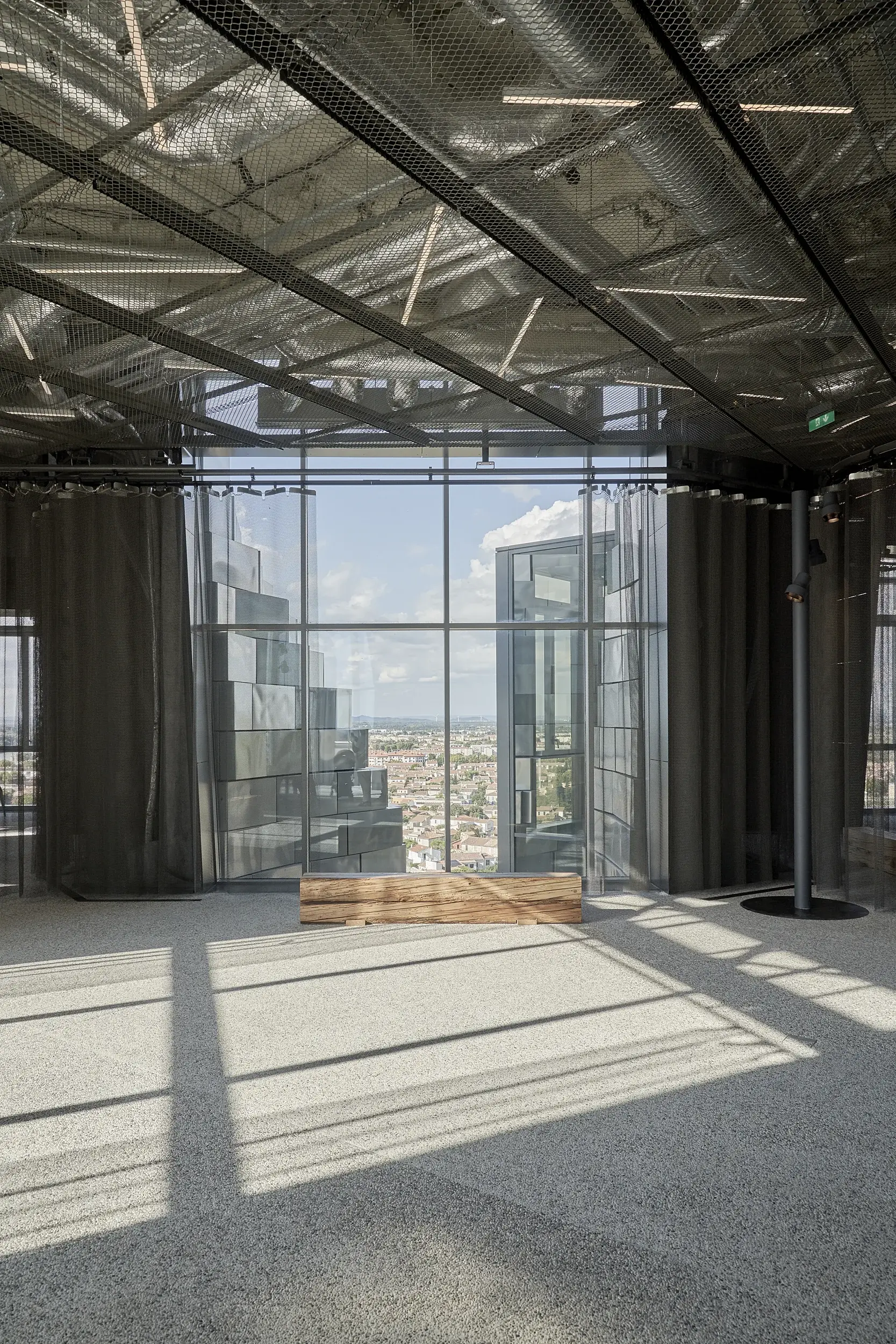
At the top of The Tower, panoramic terraces open wide views across Arles, the Camargue, and the Alpilles. The Tower also includes 53 glass boxes suspended from its metal façade, each oriented differently. From the outside, their arrangement gives the building a sense of movement. From within, these glass cocoons frame distinctive perspectives on Arles and its surroundings.

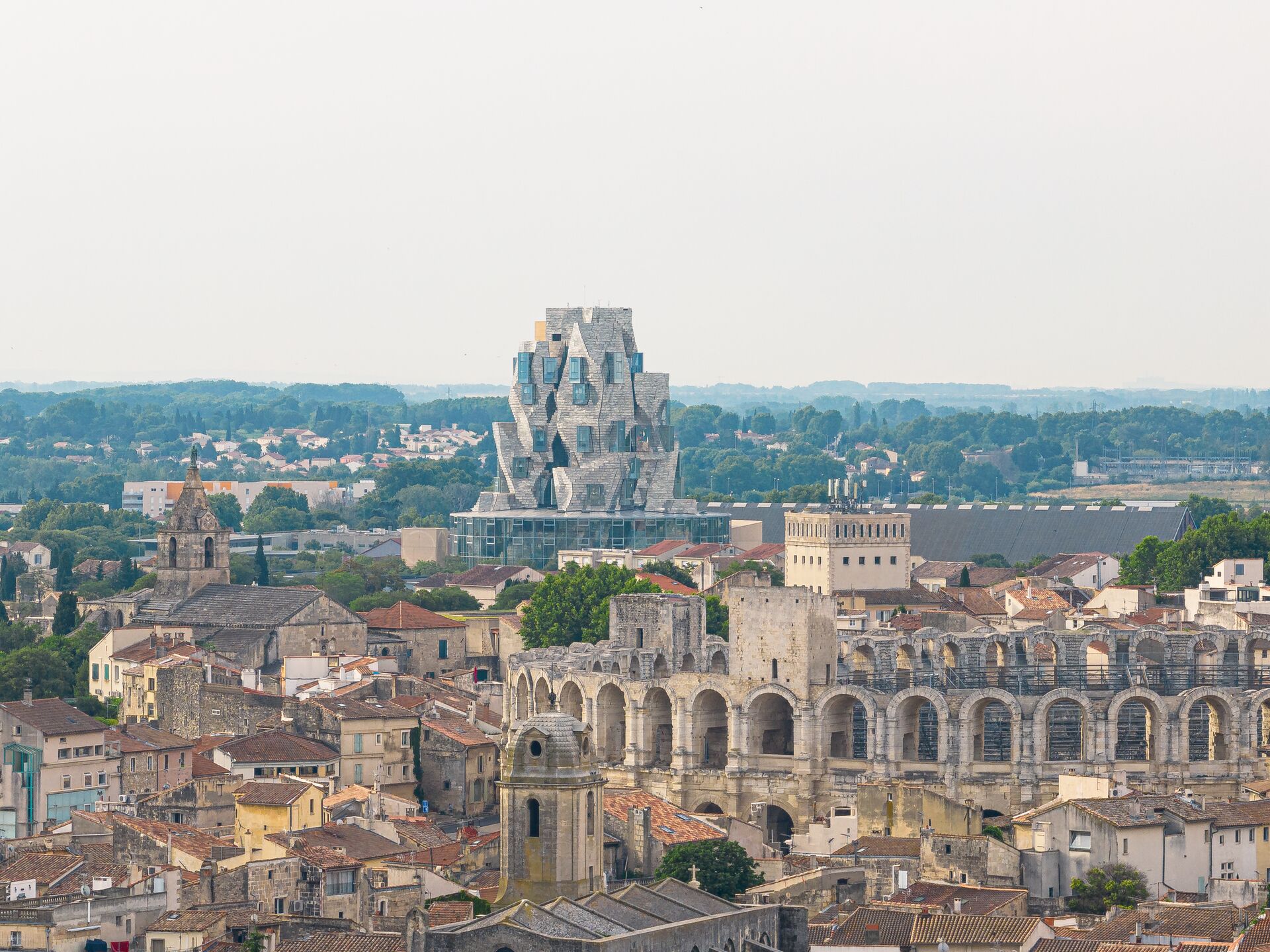
The top of The Tower offers a panoramic view over Arles’s historic center, the Camargue plain, the ridgelines of the Alpilles, and the Roman amphitheatre below.
Photo: © Adrian Deweerdt
What Is in The Tower?
The Tower contains rooms for a variety of uses, both public and private:
-
a 1,000 m² exhibition hall, the Main Gallery, designed as a single open volume without load-bearing columns and meeting international museum standards
-
two panoramic terraces on the 8th and 9th floors
-
several additional exhibition galleries
-
a café-restaurant, the Drum Café
-
workshops
-
event spaces and seminar rooms
-
offices
Some information and key figures
Height: 56 meters
Floors: 12 (10 levels)
Façade: 11,000 stainless-steel bricks; 53 glass boxes (glass cocoons)
Rotunda (Drum):
- Diameter: 54 meters
- Height: 16 to 18 meters
- Weight: 670 tons of glassInterior space: 15,000 m² total including 2,000 m² of museum-standard exhibition space

The Main Gallery at LUMA Arles is fully modular and meets international museum standards. It offers artists and curators complete freedom for spatial design and experimentation.
Photo: © Victor & Simon / Victor Picon
/Pages%20%C3%A9dito/La%20Tour/230928-LUMA-PARRENO-ANDREAROSSETTI_2%20-%201920%20x%201281.webp)
The South Gallery hosts Danny / No More Reality, an installation by artist Philippe Parreno. With its varied volumes and highly flexible spaces, The Tower can accommodate all types of artworks and support a wide range of artistic media.
Photo : © Andrea Rossetti
The Tower’s Site-Specific Artworks
The Tower contains several permanent artworks:
-
Isometric Slides, a 12-meter-high double slide by Carsten Höller
-
Drum Café, a café-restaurant designed to be an inhabitable work of art by Rirkrit Tiravanija in collaboration with Atelier LUMA, LUMA Arles’s research and design laboratory
-
Dans la forêt, a monumental ceramic wall mural by Etel Adnan
-
Take Your Time, a large circular mirror by Ólafur Elíasson, set at the top of The Tower’s double-helix staircase, whose design references the Château de Chambord
-
Laguna Gloria, an immersive soundscape in the form of an artificial garden by Liam Gillick
-
Day Light Songs (biting the air), integrated into the stairways between levels 7 and 9, midway between painting and stained glass, by Helen Marten
-
Open Space, the 8th and 9th floors conceived as an extension of the street, designed by Konstantin Grcic
/Pages%20%C3%A9dito/La%20Tour/210626-ETELADNAN-ADRIANDEWEERDT-2-2%20-%201920%20x%201280.webp)
The Dans la forêt auditorium, designed by artist Etel Adnan, hosts events, talks, screenings, and performances throughout the year.
Photo: © Adrian Deweerdt

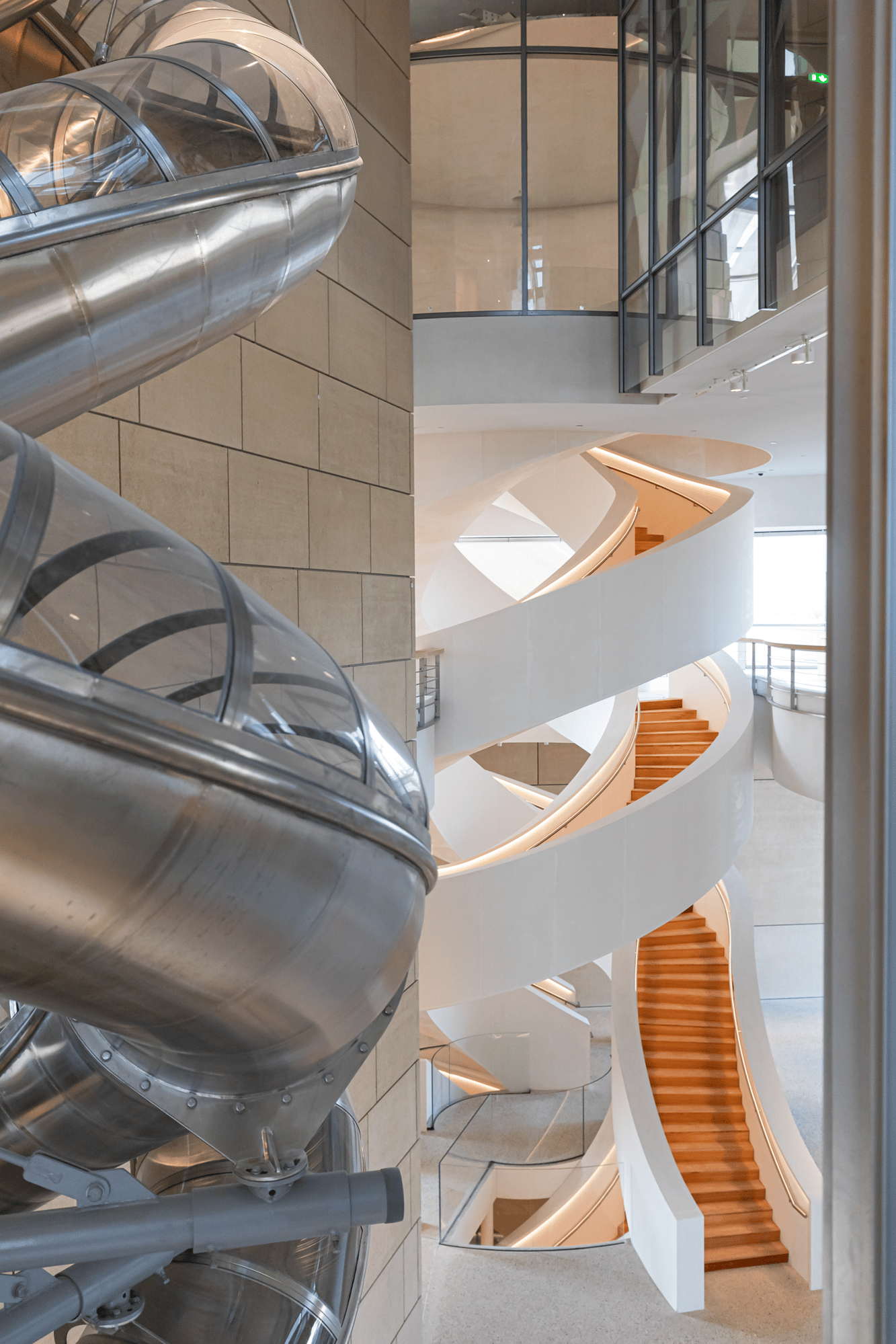
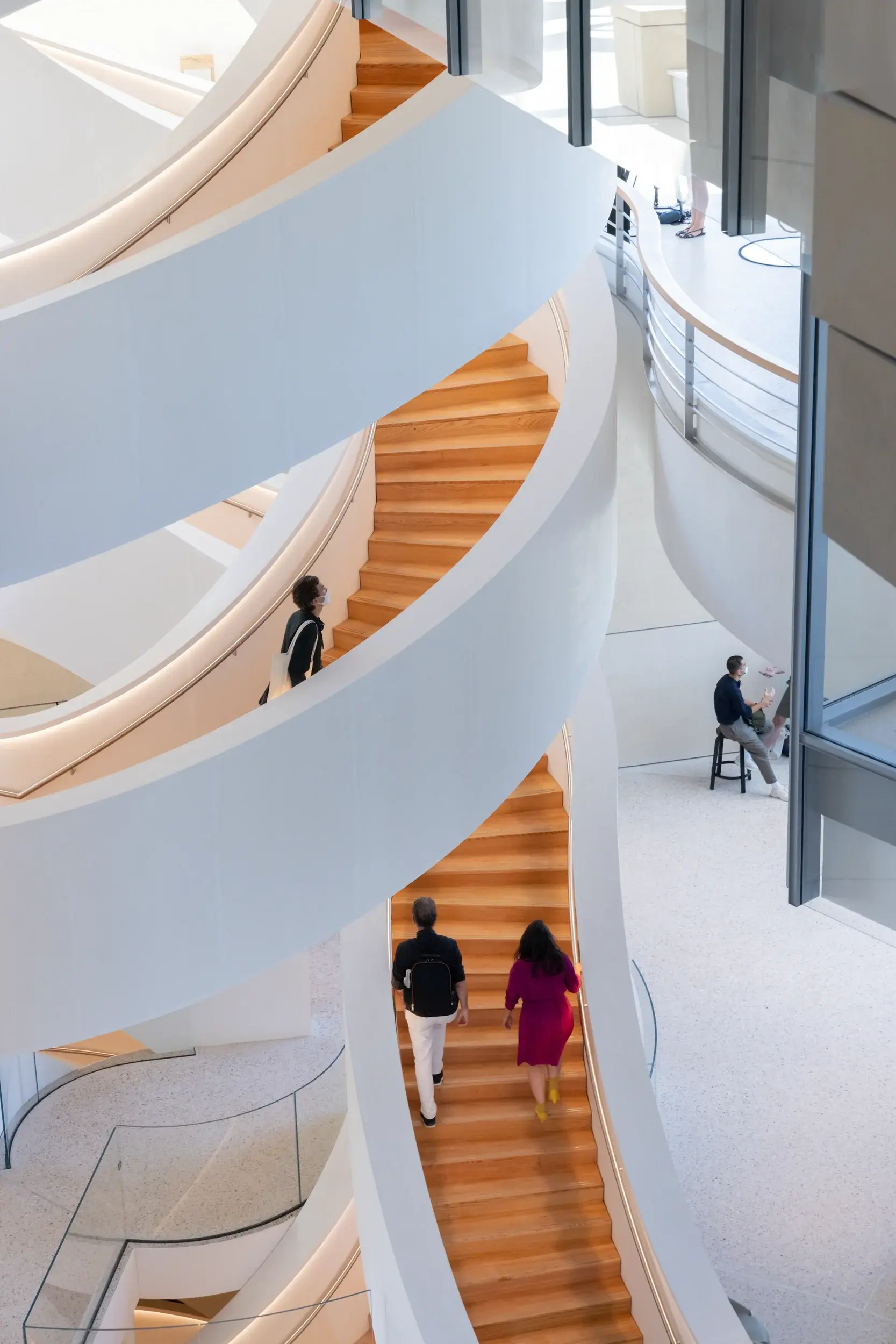
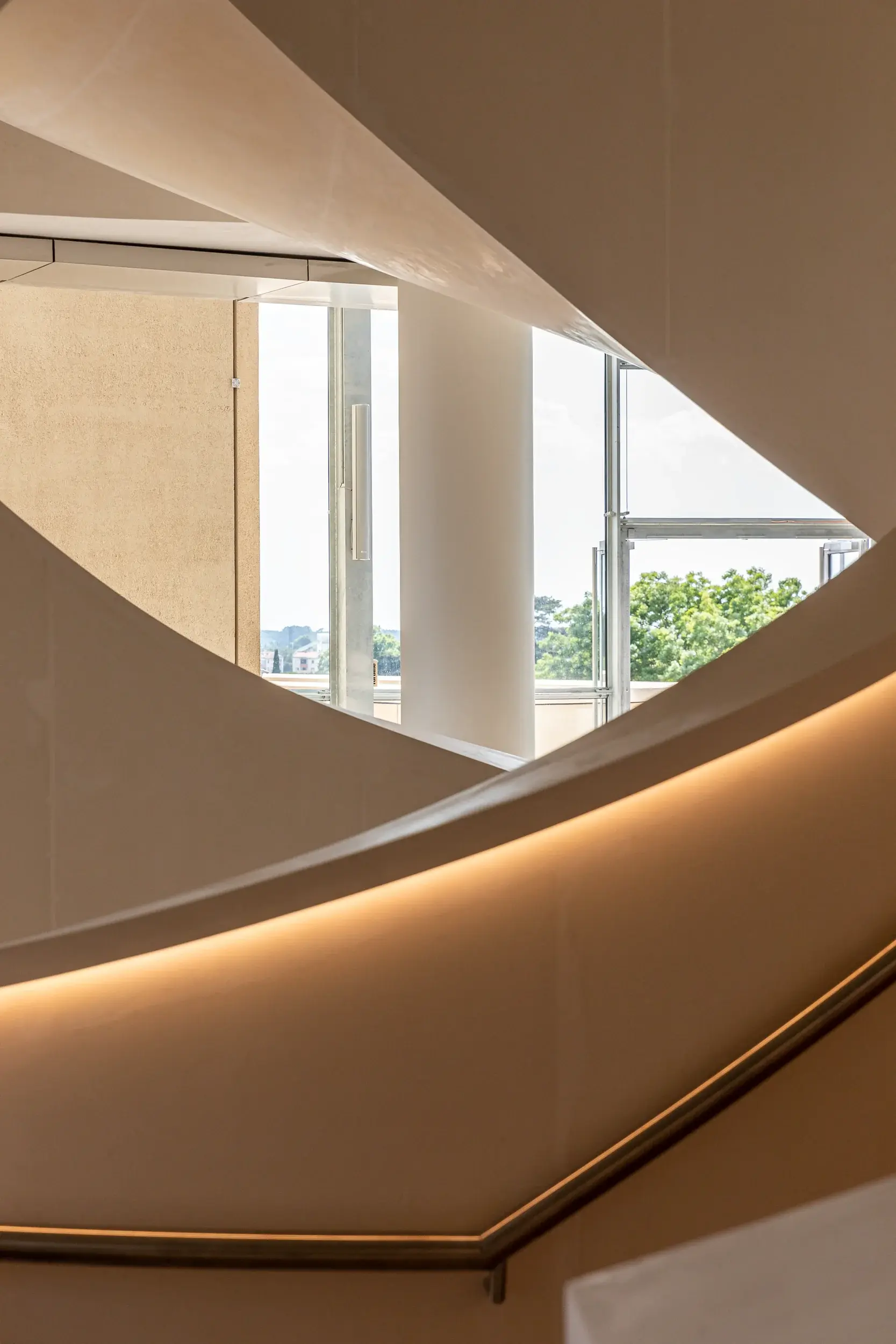
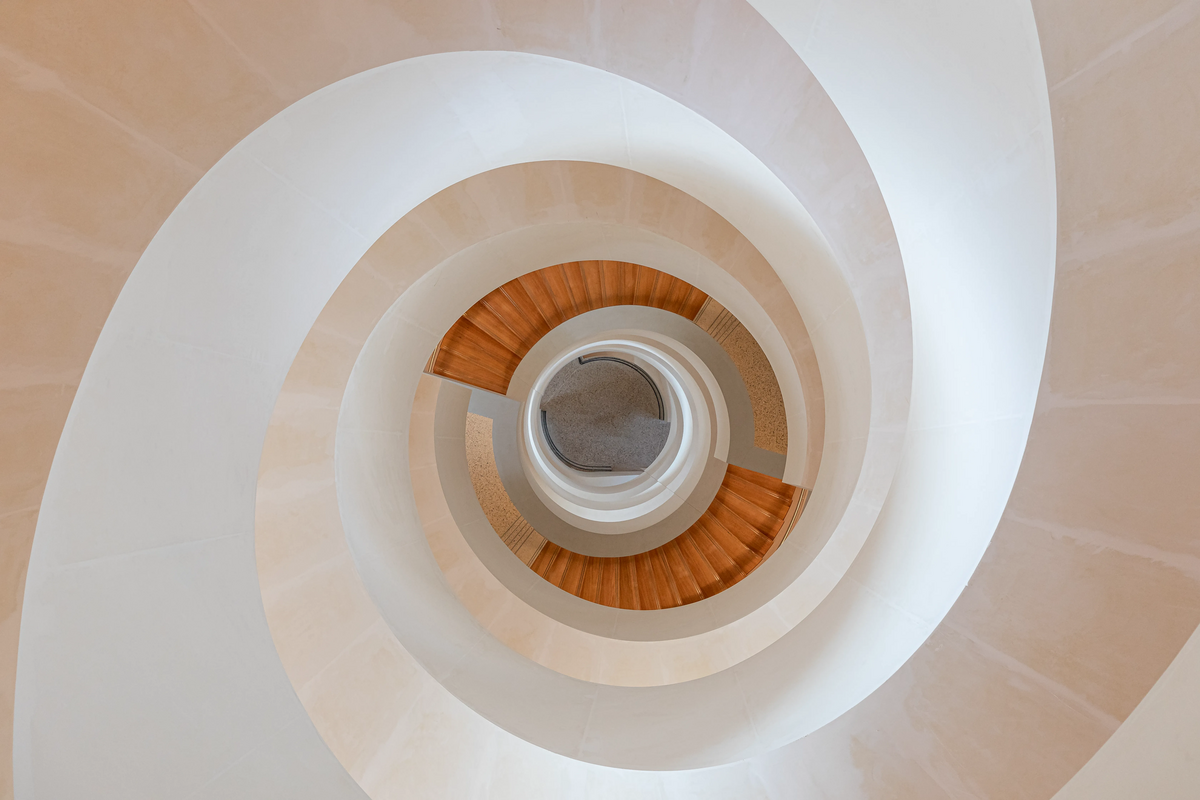
The Tower’s double-helix staircase: an architectural feat that allows two flows of visitors to circulate without ever crossing paths. Facing the staircase is Isometric Slides by Carsten Höller—a 12-meter-high double spiral slide.
Photo: © Victor & Simon
Pictures of The Tower


Find Out More About Frank Gehry, the Architect of The Tower
"We wanted to evoke the local, from Van Gogh's 'Starry Night' to the soaring rock clusters you find in the region. Its central drum echoes the plan of the Roman amphitheatre."
Frank Gehry, about The Tower
/01_CopyrightAlexandraCabri.webp?width=1500&height=2000&name=01_CopyrightAlexandraCabri.webp)
Frank Gehry, architect of The Tower.
Photo: © Alexandra Cabri
Frank Gehry is one of the most influential architects of his generation. His work has had a lasting and profound impact on architectural aesthetics, on the role of architecture within the city, and on its ability to reinvent urban space and requalify sites and territories at multiple scales.
Working in close dialogue with artists from the California scene and its most radical contemporary developments, Gehry has continually redefined architectural practice. His work has opened new directions, expanded the architect’s means of expression, introduced both modest and innovative materials, and transformed the conceptual and constructive foundations of architecture.
His most groundbreaking projects include major cultural landmarks such as the New World Symphony Concert Hall in Miami, Florida; the Fisher Center for the Performing Arts at Bard College in Annandale-on-Hudson, New York; the Signature Theatre in New York City; the Guggenheim Museum Bilbao; the Jay Pritzker Pavilion and BP Bridge in Chicago’s Millennium Park; and the Walt Disney Concert Hall in Los Angeles. He also designed the Fondation Louis Vuitton in Paris and the Guggenheim Abu Dhabi.
Among his most notable educational buildings are the Loyola University Law School, Yale’s Psychiatric Institute, the Weatherhead School of Management at Case Western Reserve University, MIT’s Stata Center, and Princeton University’s Lewis Library.
Gehry’s work has earned him many of the world’s most prestigious awards, including the Pritzker Architecture Prize in 1989, the Wolf Prize awarded by the Wolf Foundation in 1992, and the Praemium Imperiale from the Japan Art Association, also in 1992. He has additionally received the Royal Institute of British Architects Gold Medal and, in 2008, the Golden Lion from the Venice Biennale for lifetime achievement.
Frank Gehry is the founder of Gehry Partners LLP, a Los Angeles–based architecture firm specializing in the design and construction of projects worldwide across universities, museums, theaters, public institutions, and commercial developments. He is also the founder of Gehry Technologies, a software and services company whose mission is to develop technologies that support higher-performing buildings. Gehry earned his architecture degree from the University of Southern California in 1954 and pursued urban planning studies at Harvard University’s Graduate School of Design.
FAQ: The Tower and Frank Gehry
Was there a competition to choose the architect for The Tower?
The LUMA Arles project is entirely financed by private funds from the LUMA Foundation. As a private sponsor, the choice of architect was left to its sole discretion. Therefore, there was no architectural design competition.
Did Frank Gehry come to LUMA Arles?
Frank Gehry has visited Arles several times since the LUMA Arles project was launched in 2013. He studied the city, its architecture, its history, and its surroundings,drawing inspiration from the Roman sites, the rock formations of the Alpilles, and the works Vincent van Gogh painted in Arles.
He returned to Arles and the Camargue several times.
Most notably, Frank Gehry participated in the official opening of the construction site on April 5, 2014, and followed the project’s key progress milestones. He was closely involved in the discussions led by Maja Hoffmann and LUMA’s “Core Group,” formed to define the scope of the project.
His work evolved over the course of these deliberations, leading to an innovative and ambitious vision for the Parc des Ateliers site, designed as an integral part of the fabric of Arles and the Camargue. Frank Gehry also attended the grand opening of The Tower on June 26, 2021.
How long did it take to build The Tower?
Construction work was completed in 7 years. The Tower’s foundation stone was laid on April 5, 2014, and it opened to the public on June 26, 2021.
What other buildings has Frank Gehry designed in France?
In 1994, Frank Gehry designed the American Center headquarters in Paris, now the Cinémathèque française. In 2014, he designed the Fondation Louis Vuitton, an art center in the Jardin d’Acclimatation, in the Bois de Boulogne park in Paris. His most recent project in France was The Tower at LUMA Arles.
Why was Frank Gehry chosen to build The Tower?
Maja Hoffmann met Frank Gehry in 2005 during the filming of the Sketches of Frank Gehry documentary, directed by American filmmaker Sydney Pollack, which she worked on as an associate producer. Captivated by his multidisciplinary approach combining contemporary art and architecture, by the freedom of his sketching and his thinking, as well as his view of creation as a process, she was also won over by his urban-planning expertise and ability to integrate the city and its existing urban fabric into his projects. Therefore, in accordance with City of Arles protocol, she asked Frank Gehry in 2007 to redesign the rehabilitation of the Parc des Ateliers industrial wasteland and to design a new building: The Tower.
Why is The Tower 56 meters high?
Designed by Frank Gehry, The Tower rises 56 meters above Avenue Victor Hugo. From this height, it offers a panoramic view of the entire historical center of Arles and of the Rhône, as well as the landscapes of the Alpilles, the Crau, and the Camargue. Seen from outside the city, its height is comparable to that of the buildings in the historical urban center, the tallest of which is the Cordeliers Convent bell tower (now Saint-Charles College) at 57 meters. The Tower designed by Frank Gehry is thus the first high-rise building (Immeuble de Grande Hauteur, IGH) erected in Arles since the Joseph-Imbert Hospital, completed in 1974.
How did LUMA Arles get permission to build such a modern tower in an ancient city?
Endowed with an exceptional Roman and Romanesque legacy, Arles has been listed as a UNESCO World Heritage Site for more than 40 years. Furthermore, the Parc des Ateliers is located close to the Alyscamps necropolis, one of the major listed sites. Several measures were put in place to ensure the construction and restoration of the Parc des Ateliers would not disrupt this historical heritage.
Before construction began on LUMA Arles, six months of archeological surveys were undertaken to make sure there were no remains in the excavation site. Furthermore, in compliance with Ministry of Culture and Communication recommendations, The Tower cannot be seen from the Alyscamps site. In 2013, the project received a positive opinion from the Architecte des Bâtiments de France (ABF), an organization responsible for the respect and protection of heritage. It also gained the support of the Amis du Vieil Arles, a heritage-conservation association founded in 1903, which believes The Tower will constitute 21st century Arlesian heritage.
The building permit, issued by Arles’s city hall in October 2013, was granted in light of these guarantees. By revitalizing the Parc des Ateliers, it also belongs to the more contemporary history of the city. The dialogue between the new and the old is at the heart of Frank Gehry’s thinking, seen in the inspiration he drew from the ancient and natural sites of Arles to design a resolutely contemporary building that looks to the future.